


There is no single "perfect" ACCA exam order. The best route is the one that respects ACCA's progression rules, uses your existing knowledge intelligently and leaves enough time for question practice. A plan that looks fast but produces repeated resits is not a fast plan.
This guide updates and expands Kim Smith FCCA's original OpenTuition article. It covers the current ACCA Qualification, the transition to the redesigned qualification in 2027, sensible exam combinations, the best time to complete EPSM, and how to decide whether you are genuinely ready to book.
Important 2027 update. The current Applied Skills and Strategic Professional exams have their final session in June 2027. The redesigned Knowledge exams begin in July 2027, and the redesigned Expertise and Strategic Professional exams begin in September 2027. ACCA says current students will receive credit for completed equivalent elements. Use the official transition guidance and Transition Tool for your personal position; do not rely on a generic plan alone.
Start with three facts
- ACCA controls the level, but you control the order within the level. Exams are taken in modular order: Applied Knowledge, Applied Skills and Strategic Professional. Within a level, you may choose the order. If you enter an exam in the next level while the current level is incomplete, ACCA requires you to enter all outstanding exams in the current level as well.
- The booking maximum is not a study target. ACCA currently allows up to four exams in one exam cycle and up to eight distinct exams in a calendar year. For most working students, one well-prepared session exam is a stronger plan than two under-prepared attempts.
- Your exam plan must include the 2027 transition. The value of completing BT, LW, all Applied Skills exams and EPSM before transition can be greater than the value of choosing exams only by subject preference.
See ACCA's current exam progression rules before every booking.
The current ACCA Qualification at a glance
For a student with no exemptions, the current exam route is:
- Applied Knowledge: Business and Technology (BT), Financial Accounting (FA) and Management Accounting (MA).
- Applied Skills: Corporate and Business Law (LW), Performance Management (PM), Taxation (TX), Financial Reporting (FR), Audit and Assurance (AA) and Financial Management (FM).
- Strategic Professional Essentials: Strategic Business Leader (SBL) and Strategic Business Reporting (SBR).
- Strategic Professional Options: choose two from Advanced Financial Management (AFM), Advanced Performance Management (APM), Advanced Taxation (ATX) and Advanced Audit and Assurance (AAA).
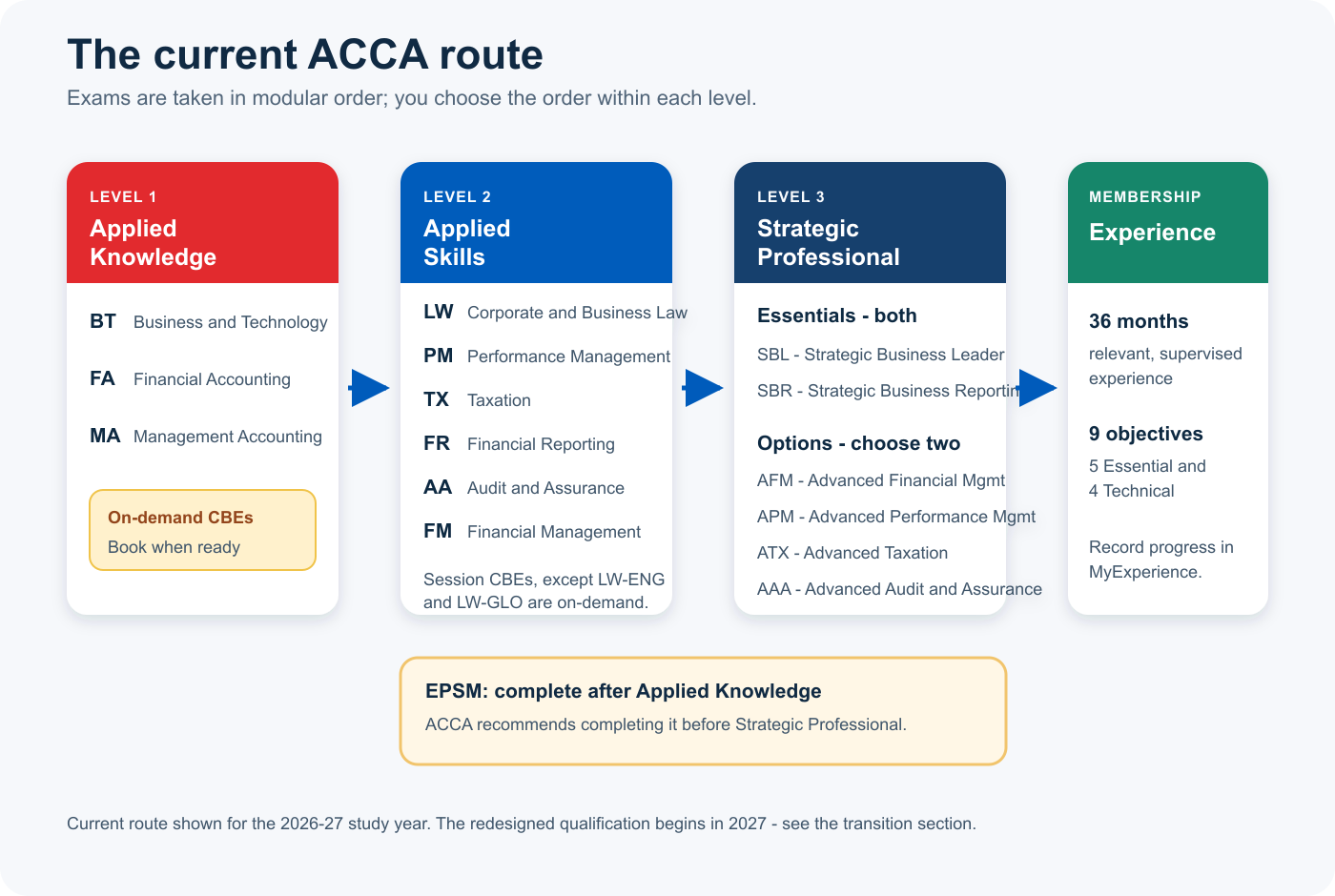
Figure 1: The current ACCA Qualification route. PER should be recorded alongside study, not left until the end.
Passing the exams is only one part of becoming an ACCA member. You must also complete the ethics requirement and the Practical Experience Requirement (PER). PER currently includes at least 36 months of supervised experience in a relevant role and nine performance objectives - all five Essential objectives and four Technical objectives. Start recording PER as soon as you enter a relevant role; do not wait until your final exam.
Understand on-demand and session exams
All ACCA exams are computer-based, but they are not all booked in the same way.
On-demand CBEs are available throughout the year for BT, MA, FA, LW-ENG and LW-GLO. They can be useful for building momentum because you can book when your preparation is ready rather than wait for a quarterly session.
Session CBEs run in March, June, September and December. PM, TX, FR, AA, FM and all Strategic Professional exams are session-based. Other LW variants are also session-based. Some adapted or variant exams are offered only in June and December, so always check the current ACCA timetable and important dates before building your study calendar.
Availability and delivery method also vary by location. ACCA has withdrawn remote session exams in countries where exam-centre provision exists, while remote availability remains in some locations. Confirm the method offered where you will actually sit the exam on ACCA's exam availability and booking page.
Use underpinning knowledge to choose exam order
You can take exams within a level in any order, but "permitted" does not always mean "educationally sensible". Later exams assume that important ideas from earlier exams are still available to you.
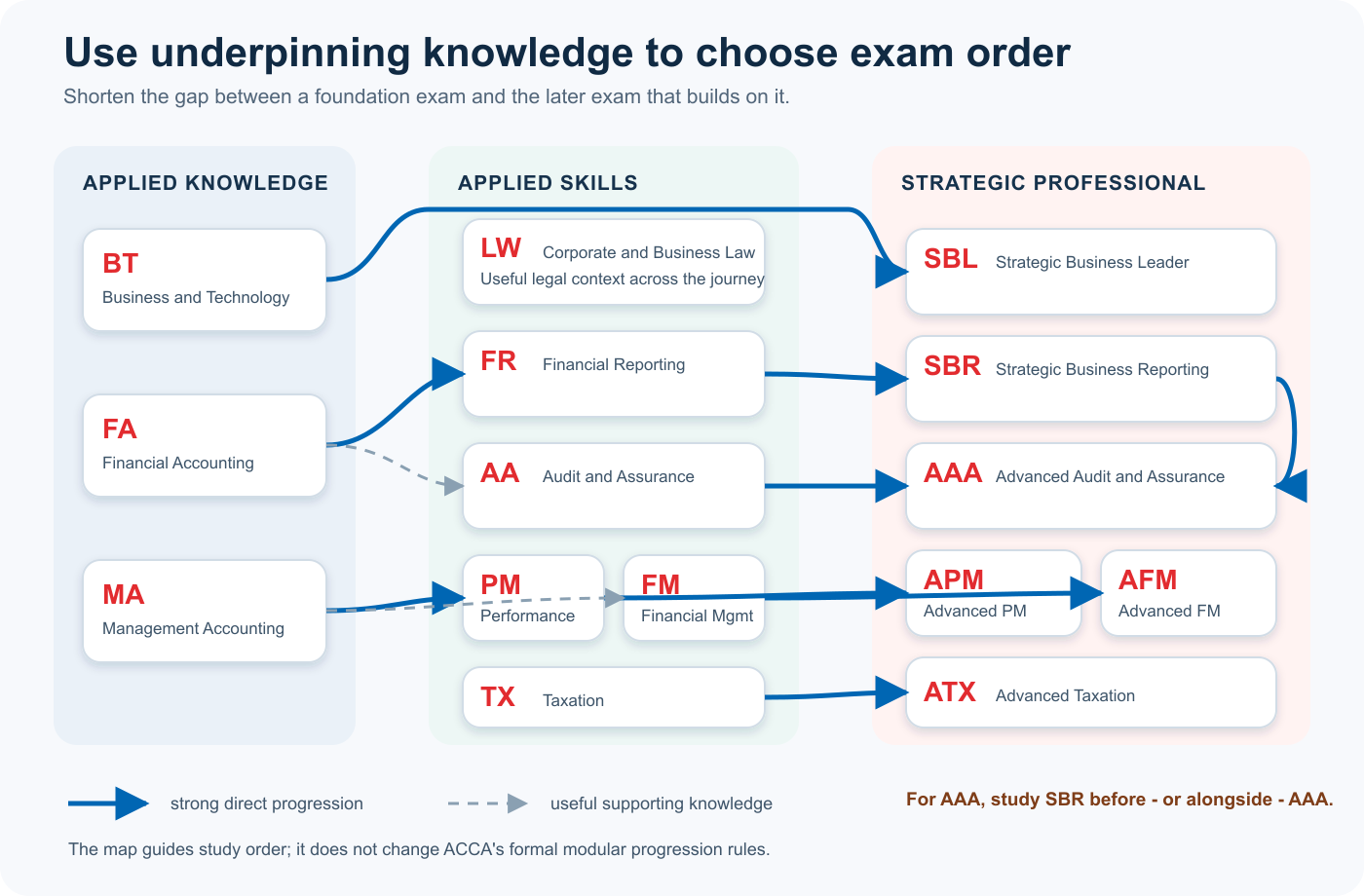
Figure 2: Direct and supporting knowledge relationships that can guide exam order.
Applied Knowledge: BT, FA and MA
BT introduces organisations, governance, leadership, technology, ethics and the business environment. It helps set the scene for the qualification and supports the broader commercial thinking developed in SBL. A student starting from scratch will usually benefit from taking BT early.
FA gives you the bookkeeping and financial accounting base used in FR. It is also important for AA: audit work makes much more sense when you understand the accounting system, transactions and financial statement assertions being audited.
MA is the foundation for PM and contributes to FM. If you have not previously studied bookkeeping, FA before or alongside MA can make the language of accounts more familiar.
For a student with no exemptions and no prior accounting study, BT, FA, MA is a sensible default. FA and MA can be reversed when prior knowledge or timetable makes that preferable.
Corporate and Business Law: do not overlook LW
LW does not directly underpin one later exam in the same way that FR underpins SBR, but it develops the legal awareness expected of a professional accountant. LW-ENG and LW-GLO are on-demand, which makes them easier to fit between session exams.
The 2027 transition makes LW strategically important. A student who has not completed LW before transition will need K3 Business Law in the redesigned Knowledge level and may have to enter it before, or at the same time as, Expertise exams. If you have completed Applied Knowledge and LW is outstanding, there is a strong case for bringing it forward.
Financial Reporting and Audit: FA, FR, AA, SBR and AAA
FR builds directly on FA and then supports SBR. AA assumes sound financial accounting and bookkeeping knowledge; it does not require you to have passed FR, and group accounting is not an AA requirement. Nevertheless, students often find FR followed by AA a coherent route because stronger financial reporting knowledge helps them understand risks of misstatement and audit evidence.
For AAA, the key reporting base is SBR-level knowledge. If AAA is one of your Options, plan to study and preferably pass SBR before AAA. Sitting SBR and AAA together can work for a strong, well-prepared student, but it is demanding: SBR study must not replace the full narrative-answer practice required for AAA.
Performance and finance: MA, PM, FM, APM and AFM
MA supports both PM and parts of FM, but PM and FM are not similar subjects simply because both grow from management accounting. PM concentrates on planning, performance measurement, decision-making and control. FM concentrates on investment, financing, working capital, risk and business finance.
PM leads naturally towards APM, while FM leads towards AFM. If you already know that APM or AFM matches your career direction, reduce the time gap between the Applied Skills exam and its Strategic Professional Option.
Tax: TX and ATX
TX is the foundation for ATX. Tax rules, rates and examinable documents change, and variants do not all follow the same availability pattern. Use materials for the exact exam version and syllabus period you have booked. For example, the current TX-UK study guide runs from June 2026 to June 2027 because of the qualification transition; an older kit may teach the wrong Finance Act.
When choosing a tax variant, consider where you intend to work and whether the corresponding ATX variant is available. ACCA offers more TX variants than ATX variants, and some variants are available only in June and December. Check ACCA's current variant exam list rather than assuming that a previous year's list is still valid.
A sensible default order - and when to change it
For a student with no exemptions, a defensible default route under the current qualification is:
- BT, FA and MA.
- LW soon after Applied Knowledge, particularly while LW-ENG or LW-GLO remains available on-demand.
- FR and AA reasonably close together.
- PM and FM after refreshing the relevant MA knowledge.
- TX at a point that suits your chosen variant and syllabus year.
- EPSM before Strategic Professional.
- SBR before AAA if AAA is chosen; otherwise order SBL, SBR and Options according to career relevance, assumed knowledge and the 2027 transition.
This is a starting point, not a command. Change it when your circumstances provide a good reason, for example:
- you have recent, strong knowledge from a degree or previous qualification;
- your job gives you regular exposure to tax, audit, reporting, performance or finance;
- a variant is available only in a particular session;
- an employer's training contract specifies an order;
- you are returning after a long break and need a lower-risk re-entry exam;
- your transition credits make one exam more urgent before June or July 2027.
If you have exemptions
An exemption removes an exam requirement; it does not guarantee that the knowledge is fresh. This is especially important when the exempted exam directly underpins your next subject.
Before starting, use ACCA's Get Ready Modules to check core knowledge. If the result exposes gaps, repair them before you attempt full exam-standard questions. On OpenTuition, use the relevant earlier free notes and lectures for targeted revision rather than automatically re-studying an entire exam.
Typical exemption risks include:
- FR or SBR after an old FA/FR exemption;
- AA or AAA without confident accounting and reporting knowledge;
- PM or FM after an MA exemption gained several years ago;
- an Option chosen because of an exemption rather than genuine career relevance or current competence.
Study rule: if you cannot explain the assumed-knowledge topic or complete a short diagnostic question without notes, treat it as a study requirement, even if myACCA shows an exemption.
Should you sit two exams in one session?
Two exams are not automatically twice as fast. They require two syllabuses, two sets of exam techniques, two separate practice plans and enough revision time to complete timed mocks for both.
Two session exams may be realistic when:
- you already have strong and recent underpinning knowledge;
- you have previously passed a session CBE and understand its demands;
- you can protect consistent weekly study time through the whole period;
- your work and family calendar is predictable;
- you can complete separate question practice and at least two timed mocks for each exam;
- an early mock for each subject demonstrates readiness, not hope.
Choose one exam when:
- this is your first session CBE;
- you are returning after a long study break;
- you are resitting because technical or exam-technique weaknesses remain unresolved;
- either subject is substantially new to you;
- work, travel, year-end or family commitments will remove study weeks;
- you are relying on watching lectures but have not budgeted enough time for written question practice.
Common combinations: benefits and warnings
| Combination | Why students choose it | Practical warning |
|---|---|---|
| LW and TX | Both involve learning and applying rules; LW-ENG/GLO can be scheduled on-demand around a session plan. | They use different legal and tax frameworks. Treat them as separate syllabuses, not one "rules" subject. |
| FR and AA | Balances computational reporting with narrative audit; strong financial accounting helps both. | AA assumes FA-level bookkeeping, not a completed FR syllabus. Do not let FR computations crowd out AA question practice. |
| PM and FM | Both draw on MA and can suit students with strong quantitative skills. | The MA topics and exam techniques used are different. Similar names do not make this a light combination. |
| SBR and AAA | SBR knowledge is directly relevant to AAA. | This is a heavy pairing. AAA requires extensive planning and full narrative-answer practice. SBR work alone is not AAA preparation. |
| Applied Skills exam and its Option | Keeps underpinning knowledge fresh: PM/APM, FM/AFM or TX/ATX. | Check progression rules, variant availability and whether the Option really suits your career. |
The best combination is therefore personal. Start with your available hours and evidence of readiness, not with a list of allegedly "easy" pairings.
What to do after a fail or a long break
A resit plan should begin with diagnosis, not automatic rebooking.
- Read your result and any available exam feedback.
- Separate technical gaps from exam-technique problems: poor time management, weak application, incomplete answers, shallow explanations or unfamiliarity with the CBE workspace.
- Rebuild the weak topics with short, focused revision.
- Return quickly to exam-standard questions and debrief every answer.
- Sit a timed mock before deciding whether to pair the resit with a new exam.
After a long break, also check your myACCA status, syllabus year, exam version, exemptions and any Strategic Professional pass expiry. Current Applied Knowledge and Applied Skills passes do not expire, but the seven-year rule applies once you pass your first Strategic Professional exam. Check the expiry information shown in myACCA and ACCA's time-limit guidance.
Complete EPSM at the right time
The Ethics and Professional Skills Module can be taken after Applied Knowledge. ACCA recommends completing it before Strategic Professional because the module develops communication, analysis, commercial awareness, ethical judgement and professional skills used in those exams.
Our recommendation is simple: complete EPSM towards the end of Applied Skills and before your first Strategic Professional exam. For current students, completing EPSM before the 2027 transition also earns credit for the redesigned Ethical, Sustainable Leadership Essential Employability Module.
Do not leave EPSM as an administrative task after your exams. It is part of preparation for higher-level case-based work and part of the route to membership.
Plan specifically for the 2027 transition
ACCA is introducing the redesigned qualification in stages:
- June 2027: final session for the current Applied Skills and Strategic Professional exams.
- July 2027: redesigned Foundations and Knowledge exams and Essential Employability Modules become available.
- September 2027: first redesigned Expertise and Strategic Professional session exams.
ACCA's current guidance says students will receive credit for completed equivalent elements. Exact mid-July 2027 deadlines for some on-demand exams and modules were still to be confirmed when this article was reviewed, so check the official guidance before acting.
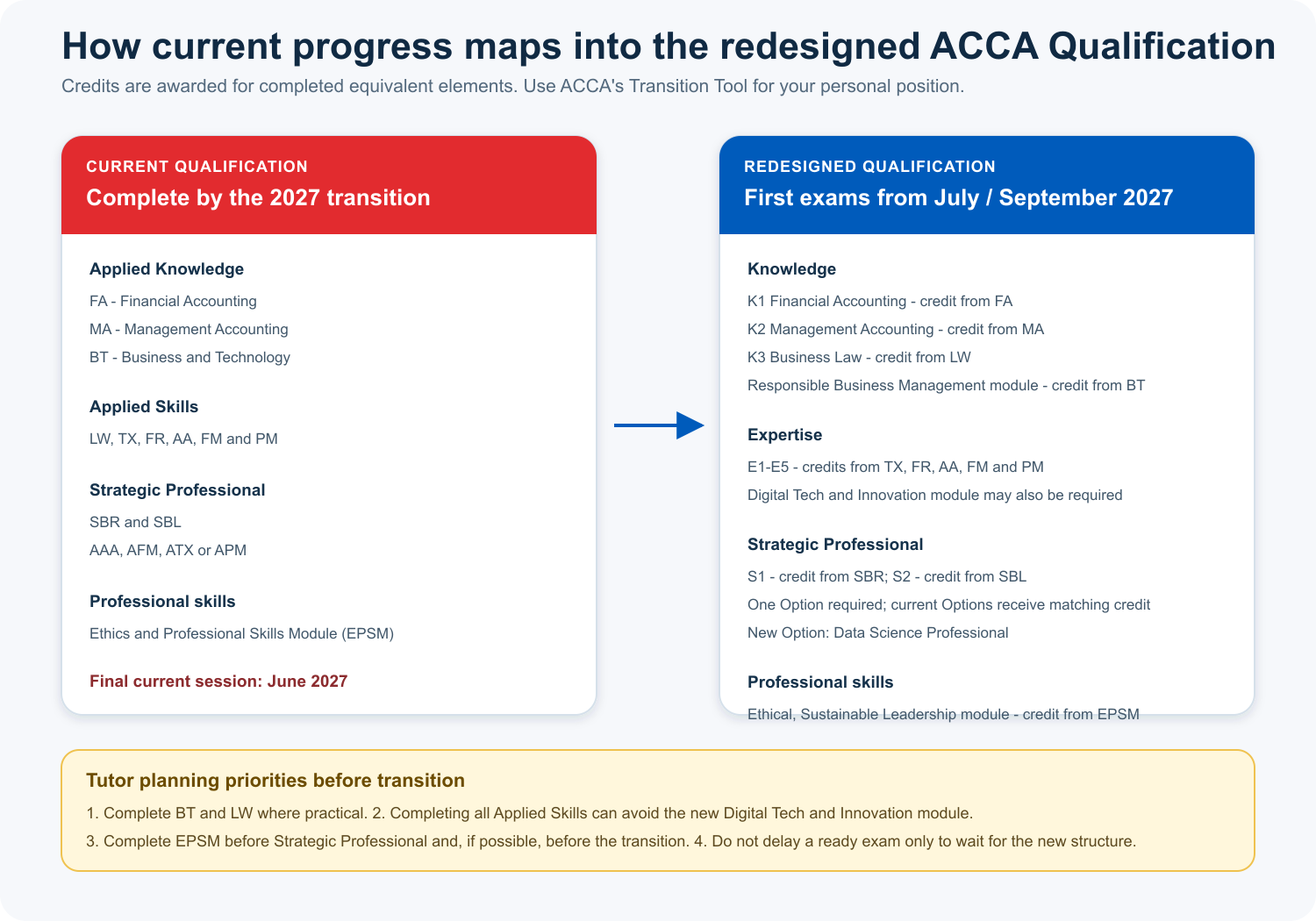
Figure 3: Summary of 2027 transition credits. Confirm your personal outcome with ACCA's Transition Tool.
Key transition mappings
| Current completion | Redesigned credit |
|---|---|
| FA | K1 Financial Accounting |
| MA | K2 Management Accounting |
| LW | K3 Business Law |
| BT | Responsible Business Management Essential Employability Module |
| TX, FR, AA, FM and PM | E1 Taxation, E2 Financial Reporting, E3 Audit, Risk and Control, E4 Finance and Investment, and E5 Performance with Data Analysis respectively |
| SBR and SBL | S1 Business and Sustainability Reporting and S2 Strategic Business Leader respectively |
| AAA, AFM, ATX and APM | Matching redesigned Options: SAA, SCF, STA and SPI respectively |
| EPSM | Ethical, Sustainable Leadership Essential Employability Module |
The redesigned Strategic Professional level requires both Essentials exams and one Option, not two. It also adds Data Science Professional as a new Option.
What to prioritise before transition
If you are in Applied Knowledge: completing BT before transition can avoid the new Responsible Business Management module. Once Applied Knowledge is complete, consider LW early because it maps to K3 Business Law.
If you are in Applied Skills: completing all Applied Skills requirements, including LW, before transition can avoid the new Digital Tech and Innovation Essential Employability Module. ACCA currently estimates that module at about 100 hours and says it must be purchased before entry to Strategic Professional.
If you are in Strategic Professional: prioritise any outstanding Essentials. If you have already passed one Option, the redesigned route will require only one; ACCA's guidance specifically suggests that students with one Option and outstanding Essentials consider prioritising SBL and SBR. Complete EPSM before transition if possible.
If you could finish under the current qualification: continue progressing. Do not postpone a well-prepared exam simply because the redesigned structure has fewer Options. A delay can cost exam sessions, study momentum, subscription time and career progression. Use ACCA's current-student transition guidance and transition timeline to compare the routes.
Do not guess your transition outcome. Two students at the same nominal level can receive different requirements because of their exact passes, exemptions, modules and expected completion dates. Run your planned passes through ACCA's Transition Tool, then check the result again after each exam session.
Build a session-by-session study plan
A useful plan contains more than exam names and dates. For each exam, include four phases.
1. Diagnose and set the scope
- Confirm the exact exam, version and syllabus period in myACCA.
- Download the current syllabus and study guide.
- Complete the relevant Get Ready self-check.
- Identify work, family, travel and religious commitments before counting available weeks.
2. Learn actively
- Use the OpenTuition notes and lectures together so that watching is linked to a written learning objective.
- Attempt short questions throughout the learning phase; do not wait until every chapter is complete.
- Keep a concise error log of technical gaps and repeated mistakes.
3. Shift early to exam-standard practice
- Use a current revision kit from an ACCA Approved Content Provider.
- Practise in the correct CBE workspace, including word-processing and spreadsheet tools where relevant.
- Debrief answers: compare requirement coverage, application, professional marks, structure and time - not only the final number.
- Use ACCA's Practice Platform for the closest rehearsal of the live session-exam environment.
4. Prove readiness
- Complete at least two timed mocks under realistic conditions.
- Review every weak area and repeat targeted questions.
- Decide early enough whether to defer, reduce a two-exam plan or proceed.
- Protect sleep, travel arrangements, identification and exam logistics in the final days.
The ACCA Study Hub provides syllabus coverage, quizzes, questions and flashcards. ACCA notes that Study Hub revision questions do not fully reproduce the CBE environment, so combine it with the Practice Platform. OpenTuition adds free tutor lectures, notes, tests and forum support.
Use a readiness gate before you book - and again before the exam
Ask yourself:
- Can I explain the main syllabus areas without reading my notes?
- Have I attempted exam-standard questions across the syllabus?
- Can I complete constructed-response requirements within time?
- Have I used the CBE tools I will need?
- Have I completed and properly debriefed at least one timed mock already, with another planned?
- Does my weekly calendar still contain the study hours assumed by my plan?
- If I am taking two exams, can I answer every question above separately for both?
- Have I checked the 2027 transition effect of passing, failing or deferring this exam?
If several answers are no, change the plan. A booking fee already paid is not evidence of exam readiness.
Plan the journey to membership, not only affiliate status
The most efficient students run exams, ethics and experience in parallel.
- Record relevant roles and time in MyExperience as you go.
- Agree performance-objective evidence with your practical experience supervisor while the work is fresh.
- Review PER progress at least once every exam cycle.
- Use your planned Options and work assignments to reinforce each other where possible.
- Remember that becoming an affiliate after the exam requirements is not the same as being admitted to ACCA membership.
ACCA says PER will continue through the 2027 transition. Current requirements remain a minimum of 36 months of supervised relevant experience and the required performance objectives. Read ACCA's PER guidance and record progress early.
Final booking checklist
Before entering an exam, confirm all of the following:
- myACCA shows the passes, exemptions and level you expect;
- you understand the progression rule that applies to your outstanding exams;
- the exam version is appropriate for your intended work location;
- the exam is available in your chosen session and location;
- your notes, revision kit, syllabus and examinable documents match the booked period;
- your study plan includes question practice, revision and mocks;
- your work and personal calendar still supports the plan;
- you have checked your exact 2027 transition mapping;
- you have a plan for EPSM and are recording PER.
Frequently asked questions
Can I take ACCA exams in any order?
Within a level, yes. Across levels, modular progression rules apply. If you enter an exam from the next level with outstanding exams in the current level, ACCA requires entry for all outstanding current-level exams as well.
Is FR required before AA?
No. AA assumes a good grasp of financial accounting and bookkeeping from FA, not a completed FR syllabus. FR can still be useful before AA because it strengthens your understanding of financial reporting, balances and misstatements.
Should I take SBR before AAA?
Yes, as a strong default. AAA assumes SBR-level reporting knowledge. If you sit them together, protect enough time for AAA planning and full narrative-answer practice.
How many exams should I take in one session?
Take the number you can prepare for properly. ACCA's maximum of four per cycle and eight distinct exams per calendar year is an administrative limit, not a recommendation. Most part-time students should start from one session exam and add a second only when time and mock evidence justify it.
When should I complete EPSM?
After Applied Knowledge, ideally towards the end of Applied Skills and before the first Strategic Professional exam. Completing EPSM before transition also maps to the new Ethical, Sustainable Leadership module.
Should I wait for the redesigned qualification because it requires only one Option?
Usually not if you can continue making sound progress now. The answer depends on your exact passes, expected session outcomes, work goals and transition credits. Use the Transition Tool rather than delaying by assumption.
What is the best first exam after exemptions?
The exam whose assumed knowledge you can demonstrate and whose place in your transition plan makes sense. Complete the relevant Get Ready diagnostic first; an exemption is not proof that the knowledge remains current.
OpenTuition conclusion
ACCA is a marathon, but "steady" does not mean vague. A strong plan is specific about exam order, weekly study capacity, assumed knowledge, question practice, mock performance, transition credits, EPSM and PER.
Choose the next exam that you can prepare for fully and that moves you through the qualification without creating avoidable knowledge gaps. Review the plan after every result and whenever work or family circumstances change. The surest way to progress faster is to prepare well enough to pass consistently.
Official sources and next steps
- ACCA exam progression rules
- ACCA current-student transition guidance
- ACCA 2027 transition timeline
- ACCA exam formats and availability
- ACCA variant exams
- ACCA Get Ready Modules
- ACCA time limits
- ACCA Practical Experience Requirement
- OpenTuition free ACCA notes, lectures, tests and tutor support
This OpenTuition guide was reviewed on 15 July 2026. ACCA can change exam availability, deadlines, variants and transition arrangements. Always check your myACCA account and the linked ACCA pages before booking.