
Business Structure, Management Accounting and Change

1 Performance measurement in complex business structures
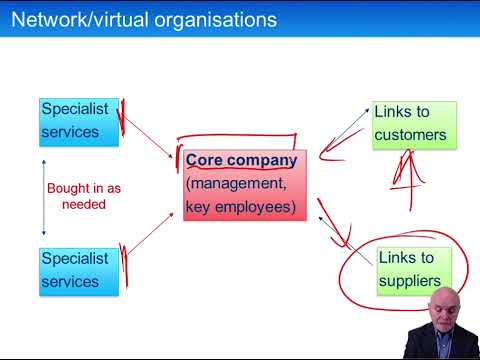
Many organisations now operate through alliances, joint ventures and extended supply chains rather than through a single, self-contained legal entity. Performance management must therefore look beyond the results of one company or one division. It should measure whether the whole arrangement is achieving the purpose for which it was created.
SLA questions reward application rather than a lengthy definition. Use the relationship described in the scenario to identify gaps in scope, targets, measurement, responsibilities, escalation and review. Explain the practical consequence of each gap for service performance and for both parties.
1.1 Strategic alliances
A strategic alliance is a cooperative arrangement between independent organisations. Each party remains legally separate but agrees to share resources, knowledge, technology, distribution channels or other capabilities.
Useful performance measures should cover:
achievement of the shared objective – for example market entry, innovation or access to customers;
contribution by each partner – finance, people, knowledge and other promised resources;
joint outputs – quality, time, cost, customer outcomes and innovation;
relationship quality – trust, information sharing, disputes and speed of joint decision making; and
value received by each partner – the alliance must remain worthwhile to all parties.
The measures, definitions and data sources should be agreed at the start. Otherwise one partner may dominate the reporting, use different definitions or optimise its own result at the expense of the alliance.
1.2 Joint ventures
A joint venture normally involves shared control of a separate activity or entity. The partners may have different objectives, cultures, accounting policies and attitudes to risk. A balanced set of measures should therefore include the venture's total performance and the outcomes important to each owner.
Measures may include return on capital committed, cash generation, milestones, market share, quality, safety, environmental impact and transfer of knowledge. Governance arrangements should specify who supplies the data, who validates it, how disagreements are resolved and when the measures will be reviewed.
1.3 Complex supply chains
Supply-chain performance is an end-to-end issue. A low purchasing price is not a success if it causes defects, long lead times, stock-outs or reputational damage elsewhere in the chain.
Measures may include:
on-time-in-full delivery and total order cycle time;
defect, return and warranty rates;
inventory days, forecast accuracy and supply-chain cost;
capacity, resilience and recovery time after disruption;
supplier innovation and relationship quality; and
ethical, social and environmental performance.
Measures should discourage local optimisation. For example, rewarding a supplier only for unit-price reductions may increase inspection, rework and customer-service costs. Shared definitions and timely information are essential because delay or distortion in demand information can be amplified along the chain.
2 Service level agreements
A service level agreement (SLA) states the level of service one party is expected to provide to another. It can be used with an external supplier or between internal functions, such as IT and its users.
2.1 Contents of an effective SLA
the parties, purpose and scope of the service;
precise service definitions and exclusions;
key performance indicators, targets, tolerances and reporting frequency;
the data source and method of measurement;
responsibilities of the provider and the customer;
priorities, escalation routes, remedies and service credits;
arrangements for security, continuity and disaster recovery; and
review dates, change control, renewal and termination provisions.
Targets should be relevant, measurable and within the provider's control. They should also reflect business outcomes. A target of 99.9% system availability, for example, is of limited value if outages occur during the customer's busiest trading period.
2.2 Implementing and monitoring an SLA
Before implementation, both parties should agree definitions and establish baseline performance. Responsibility for data collection and validation must be clear. Reports should show trends, exceptions, causes and corrective action rather than simply a large quantity of statistics.
The SLA should be reviewed when technology, demand, risk or business strategy changes. An agreement can produce dysfunctional behaviour if the provider concentrates only on measured targets and neglects unmeasured aspects of service.
2.3 Illustrative SLA assessment
An IT help desk reports that 96% of calls are answered within 20 seconds against a target of 95%. However, only 62% of incidents are resolved at first contact and repeated incidents are rising. The response-time target has been achieved, but the wider service is deteriorating. Management should retain the speed measure and add measures of first-contact resolution, recurrence, user satisfaction and business downtime.
3 2026/27 syllabus note
The McKinsey 7S model is retained here as background reading, but it is no longer specifically listed in the APM syllabus for September 2026 to June 2027. Examination preparation should give priority to performance management in alliances, joint ventures and complex supply chains, including the design and implementation of service level agreements.Introduction
This chapter looks at the different types of business structure, and the effect the structure has on the information needed. It also looks at the types of changes that business might implement to improve their performance.
Page 1 of 3