
Performance Management and Control of the Organisation

1 Introduction
A calculation is not a complete APM answer. Show the basis of the calculation, state what the result means, compare it with an appropriate target, trend or benchmark, identify limitations and finish with a scenario-specific conclusion or action where requested.
Planning and operational variances have repeatedly been weakly attempted. Calculate absolute monetary amounts, reconcile them to the total variance, distinguish planning changes from operational performance and then explain controllability, fairness and any effect on performance-related reward.
This chapter looks at budgeting used as a method of control within an organisation.You will already have been examined on budgeting in previous examinations, and much of this chapter is therefore revision.

In this examination, questions are more likely to focus on written aspects, and the syllabus includes budgeting in not-for-profit organisations; modern developments; and behavioural aspects.
2 Functions of budgeting
Forecasting
Planning
Communication
Co-ordination
Control
Authorising and delegating
Motivation
Evaluation of performance
[Mnemonic: Few People Can Comfortably Carry A Male Elephant!]
3 Principal budget factor
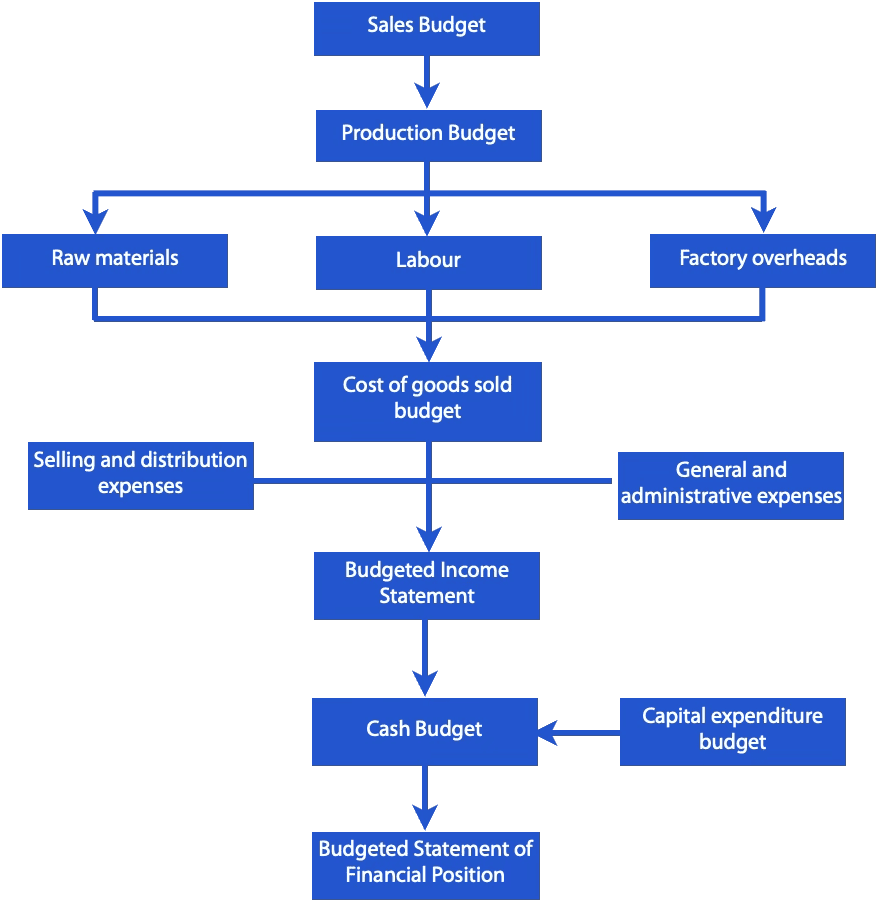
The principal budget factor is the factor that limits the activity for the budget period. Normally this is the level of sales and therefore the sales budget is usually the first budget to be prepared – this then leads to the others.
However, it could be (for example) a limit on the availability of raw materials that limits activity. In this case raw materials would be the principal budget factor, and this would be the first budget to be prepared.
4 The preparation of budgets
Page 1 of 3