
How was your September 2022 ACCA SBL exam?
Vote in the Instant Poll
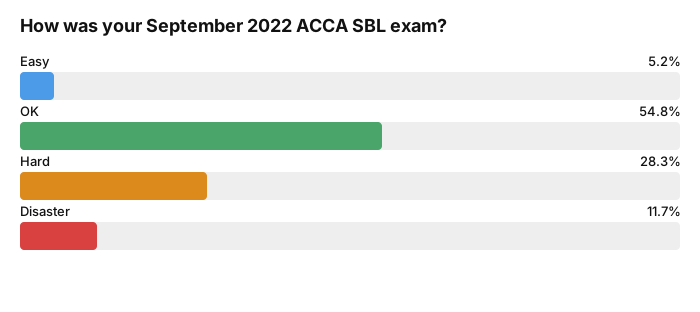 (Comments will be opened after 5PM UK)
ACCA Forums
dipatil wrote:tara19 wrote:As far as I remember the stakeholder question was phrased like ‘ what factors should QH consider when deciding how and what is reported to the stakeholders’ When I first read this question I wrote down integrated reporting and the 6 capitals so when I came to write I would remember.<br>But when I came back to write I read the question again and took the stakeholder matrix route – keep informed, keep satisfied etc. because it mentioned what factors I thought it was asking more how do we know what to report to the stakeholders ie how involved are they rather than what reports do they get – but I could be wrong??<br>I guess now I am thinking about it maybe it could have been leaning more towards they should adopt IR and the advantages. Can someone enlighten me?
adrianlam168 wrote:I thought Tows Model should be more appropriate since the exhibit did give us the strength, weakness, opportunities and threat. Thought using Tows to evaluate the competencies of QH is the best approach??
agboolakenny84 wrote:I don’t think it was IR. I stand to be corrected. You would have to classify the stakeholders into Power and Interest using the stakeholders theory, thereafter you will classify each of the stakeholders and decide how to report to them.Definitely no this what you have applied doesnt make sense in this question that was included in the exam. It was definitely IR as there was not info about the power & interest of any of the stakeholders, plus with the IR you can tackle the capitals, if I remember good it was mentioned something about how to improve reporting or to give more info to the stakeholders
saif2589 wrote:For stakeholder question I used power/interest and how to approach them apart from focusing a lot on annual reporting I used the form of email, letter, website. Am I correct ?did you have QH company in your exam? beause if you did definitely not there were reports, brief note, slides, memorandum and one briefing report if I remember good
saif2589 wrote:For stakeholder question I used power/interest and how to approach them apart from focusing a lot on annual reporting I used the form of email, letter, website. Am I correct ?did you have QH company in your exam? beause if you did definitely not there were reports, brief note, slides, memorandum and one briefing report if I remember good
veexk wrote:How did people respond to the question about comparing the performance of the two divisions? Felt like there wasn’t a lot of info to go fromI agree with you I used the info from the SWOT analysis and add some further info
agboolakenny84 wrote:I don’t think it was IR. I stand to be corrected. You would have to classify the stakeholders into Power and Interest using the stakeholders theory, thereafter you will classify each of the stakeholders and decide how to report to them.besides in real life that doesnt make sense companies are not making reports or preparing info for different users besides the goverment and the annual accounts that they prepare each year
dipatil wrote:agboolakenny84 wrote:I don’t think it was IR. I stand to be corrected. You would have to classify the stakeholders into Power and Interest using the stakeholders theory, thereafter you will classify each of the stakeholders and decide how to report to them.
dipatil wrote:agboolakenny84 wrote:I don’t think it was IR. I stand to be corrected. You would have to classify the stakeholders into Power and Interest using the stakeholders theory, thereafter you will classify each of the stakeholders and decide how to report to them.
DSAV90 wrote:I thought it was asking the benefits of IR for stakeholder management so was describing it and how it would be helpful by including the various financial and non-financial information for stakeholders to have a broader view of the company with QH being able to demonstrate how it is performing against the all strategic objectives.fully agree with you :)
tara19 wrote:It is possible we are talking about 2 different questions. The Q I had was what factors should QH consider when deciding how and what is reported to the stakeholders.mmm not really the how is been tackled by the IR. Mendelow framework is often used to attempt to understand the influence that each stakeholder has over an organisation’s objectives and/or strategy. In this case it was reffered as you properly say in how and what info we were supposed to share with the stakeholders. As I wrote previously and demostrating commercial accumen organisations besides their annual accounts and gubermentals reports its not common that they prepare other reports for the different stakeholders they have
tara19 wrote:It is possible we are talking about 2 different questions. The Q I had was what factors should QH consider when deciding how and what is reported to the stakeholders.mmm not really the how is been tackled by the IR. Mendelow framework is often used to attempt to understand the influence that each stakeholder has over an organisation’s objectives and/or strategy. In this case it was reffered as you properly say in how and what info we were supposed to share with the stakeholders. As I wrote previously and demostrating commercial accumen organisations besides their annual accounts and gubermentals reports its not common that they prepare other reports for the different stakeholders they have
Zoe wrote:Q1 seemed to me like internal analysis (core competencies and resources) so I thought about using Baldridge performance excellence (there was also a technical article about this on ACCA website which would be a clue) but I couldn’t remember all the elements so I went with Porter’s value chain… rightly or wrongly.I think you could apply the Baldrige model however in my opinion it was too short time for that , or maybe I was too slow but I just jused the SWOT analysis to analyse the perfomance...
tara19 wrote:It is possible we are talking about 2 different questions. The Q I had was what factors should QH consider when deciding how and what is reported to the stakeholders.mmm not really the how is been tackled by the IR. Mendelow framework is often used to attempt to understand the influence that each stakeholder has over an organisation’s objectives and/or strategy. In this case it was reffered as you properly say in how and what info we were supposed to share with the stakeholders. As I wrote previously and demostrating commercial accumen organisations besides their annual accounts and gubermentals reports its not common that they prepare other reports for the different stakeholders they have
Zoe wrote:Q1 seemed to me like internal analysis (core competencies and resources) so I thought about using Baldridge performance excellence (there was also a technical article about this on ACCA website which would be a clue) but I couldn’t remember all the elements so I went with Porter’s value chain… rightly or wrongly.I think you could apply the Baldrige model however in my opinion it was too short time for that , or maybe I was too slow but I just jused the SWOT analysis to analyse the perfomance...
agboolakenny84 wrote:I disagree. How then would you classify the stakeholders using IR ?. Of course you can use power and interest to classify the stakeholders. The government has high power and high interest as they can implement regulations and legislations and they want to ensure that housing was good in Moria.exactly companies are not preparing reports for the info that employees want f.e.....and in the IR you can tackle it with the 6 capitals. In that way you can give broadly info to your stakeholders. Actually there was a request from one of the clients included in the blog that he was not able to find some info about the company,. If the IR was prepared it will be very possible that this person can find that info and satisfy his needs
saif2589 wrote:2) seperation of audit/risk committee slides i wrote benefits<br>-independence of thought and decision not involved in self interest threat<br>-segregation of duties as both committies duties will be divided<br>-reduces conflict of interest as both committes would know who they would be accountable to<br>challenges<br>-unity of both committee rather than one committee<br>-more knowledge and skills would be spread if both committies are joinedregarding the audit risk committe I agree with you generally I put some of those, and from the 3rd question I dont rememberit ....what was that question about?
saif2589 wrote:b) challenging the ED on his view about responsible leadership on wider stakeholders And public interest stating to QH why environment is important to them?Oki oki but this was not in slide as far as I remeber you needed to write a memoradum...there is one technical article about responsible leadership basically you need to fit it with QH I think some of what you mentioned suits good :) like this point protecting the envrioment would increase public awareness for QH. this in turn would allow investors to invest in the company leading to high profits