We are on double entry class, For transaction (c) shouldn't it be :
Dr Inventory 500
Cr Cash 500
(d) should it be :
Dr Inventory 600
Cr Account Payable 600
For (f) transaction should it be :
Dr COGS 500 (Assuming the items has been purchased for 500 from transaction (c))
Cr Sales 300
Cr Inventory 500
Please help, I've already confused , thank you
J
John MoffatTutor·
When we purchases goods we debit purchases. The inventory account is only used to record the inventory that is left at the end of the period (and this is explained in the later chapter on the inventory adjustments).
K
Kaavya·
Don't we make journal before ledger?
J
John MoffatTutor·
It depends. Journals are usually reserved for the year end adjustments.
This is all explained in later chapters.
A
AdinaZahn·
why is Allowance for irrecoverable debts an asset?
J
John MoffatTutor·
It isn't an asset - it reduces an asset.
Watch our free lectures on irrecoverable and doubtful debts for a full explanation.
D
Dotse·
Please @Mr. Mofart, are this lectures relevant for someone seating FA in 2026?
J
John MoffatTutor·
Yes they are :-)
K
kasim·
SEARCH UP THE DEADCLIC ACRONYM THATLL HELP WITH DOUBLE ENTRY ACCOUNTS
IF THE ITEM IS AN ASSET FOR EXAMPLE AN INCREASE OF THAT ASSET WILL MEAN DEBIT THAT ACCOUNT,LESS OF THAT ASSET U CREDIT THAT ACCOUNT,SO CLASSIFYING ACCOUNTS MIGHT HELP YOU,BUT THE LECTURE WAS REALLY GOOD EXPLANATION WISE SO EVEYRTHING MAKES SENSE, SO U DONT NEED TO KNOW THIS,JUST THOUGHT IT MAY HELP ANYONE
S
Selassie Rexford·
Sir, if the owner takes some of the goods for himself, will the drawings be recorded at the cost of purchase of those goods, or at cost plus markup since they are meant to be resold for profit?
J
John MoffatTutor·
They are recorded at cost. (When calculating tax there might be an adjustment made, but this is separate from the bookkeeping and not relevant for Paper FA).
M
M·
Hello,
Q: In Lecture notes Chapter 3, example 5 , in it, while calculating claculating profit and loss , We added:
purchase $ 1100 | sales $1700
rent $ 200 |
_______________________________
profit = 400 $
(WHY don't we add car purchase? do we add as an expense ? )
N
Navya·
A car is an asset, so record it in the statement of financial position, and any expenses that are related to assets are recorded in the statement of financial position as well. Hope that helps!
M
M. Arif·
Fantastic!!! Great to learn FA all over again. BTW, i loved that expression about DR.. "I have no idea why its DR for Debit"....:) Thanks a lot.
J
John MoffatTutor·
:-)
A
Ayaan·
I always thought DR = Debit Records / CR = Credit Records
E
Ehis·
Debere, Credere. Latin.
S
Shafiqullah·
thanks alot it was very simple
Z
Z·
Many thanks for the lecture. Can I please know if we need to learn T Accounts for FR module?
J
John MoffatTutor·
Please ask the tutor in the Paper FR Ask the Tutor Forum.
J
Jawaher·
Best explanation ever. I am understanding accounting like never before.
J
John MoffatTutor·
Thank you for your comment :-)
A
ali·
Hi Sir,
Hope your in good health and spirits. Question on last entry of drawings. Is this treated in same manner as dividends? I.e it is part of owners equity which essentially increases with credit but as it reduces equity it is seen as a contra asset account hence increased with debit? Also in equations it is in credit side but with a negative, increase in net assets=capital+profit-drawings.
Thanks in advance
S
Sepas·
Really indebted to you, professor!
M
mrx1·
sir you credited sales it that means sales is decreased and when income decreased must be credited? but hows that fits the three rules of credit thanks
M
mahoysam·
Sales is an income account. When you credit income, you increase it.
J
Jamie·
I think you credit income because sales/profit belongs to the owner or shareholders of the business so is now capital (owed to the owners) essentially a liability from the businesses perspective. And back to the entry credit rule 'an increase in a liability' which is the profit.
T
Tony·
I think the word "sales" here is the number of goods sold. If you credit sales, it means that the number of goods has decreased and you received cash in exchange (DR cash for sales).
The same logic applied to Receivable; CR sales => number of goods fall in exchange for Receivable (DR receivable for sales).
A
ABDULLE·
Well explaining thank you very much Mr JM
J
John MoffatTutor·
Thank you for your comment :-)
S
sonali·
its the first time i understood how to do double entry. ive done other courses but i understood nothing from it. your explaining is very precise and simple.
J
John MoffatTutor·
Thank you for your comment :-)
T
Thomas·
I just realized you've already explained my question. Many thanks. I understand why we open the drawings account now
J
John MoffatTutor·
Great :-)
T
Thomas·
Hello Sir, would I have been wrong if I had debited the capital account with the $100 Kristine the owner took and credited cash of $100 instead of opening a drawings account since drawings go on to reduce the capital we owe to the proprietor?
B
Barathiraj·
Dear Lecture sir, and open tuition,
Thank you very much for your free lecture and its very useful for all.
Thank you very much.
J
John MoffatTutor·
Thank you for your comment :-)
M
MohamedSupporter·
I really appreciate the way you deliver the information.
Very clear.
S
Salah·
Epic.. Thank you!
J
John MoffatTutor·
Thank you for your comment :-)
L
lee28taemi·
Thank you so much for this. It's all starting to make sense now.
J
John MoffatTutor·
That is great :-)
A
Asif·
Excellent, excellent lecture sir !
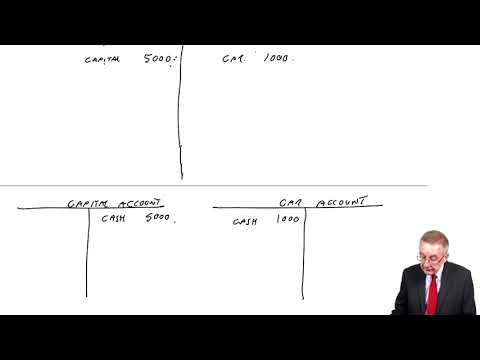
Now I understand the logic about the background of T accounts (two sides of a physical page), nominal ledger (the entire book of accounts - I love how you showed a physical example of a book ), ledger = another word for book, and double entry (how you used cash account as the basis to relate to the results in other accounts)
Other tutors would not go to such lengths or rather would lack your wisdom and capabilities to get the point across in such an easy and nice way.
Although I do wonder, why would would someone waste an entire two pages for a Car account - not much activity can be expected from it in the future. Why not just create a single non asset account including all such future non asset purchases such as cars etc within them to save space.
J
John MoffatTutor·
Given that these days the 'pages' will be on computer, then there is no waste :-)
P
Paul·
Thank you I have been struggling to understand this for a long time
J
John MoffatTutor·
I am glad that you found it useful :-)
J
John MoffatTutor·
Thank you for your comment :-)
W
Wasif·
I like the way you make it simple. And then I think your going to build up the concepts, one top of the other. Thank you.
J
John MoffatTutor·
Thank you for your comment :-)
B
Bennett·
In real life, I would say -Motor Vehicles.
B
Bennett·
Don't forget to include the inventory balance b/f from the previous year.
Cost of goods sold (COGS) or Cost of Sales = Beginning of Inventory + Purchase - Closing Inventory.
Yes, Inventory is an asset always goes to debit side.
I hope it helps.
K
kamranshahs·
Respected sir .
there are lot of topics which are missing in lecture from chater 2 and 3 like dayBooks etc ?
J
John MoffatTutor·
They are covered in a later lecture (Books of Prime Entry), because day books are not actually part of the double entry.
There is nothing missing - the lectures are a complete free course and cover everything needed to be able to pass the exam well.
Z
zihan·
Hi sir, good day to you!!
Thank you for your lecture!
Just a small question: In real life, when we prepare for a T account if we purchase a car, will we call it 'car account' or 'asset account'? Thank you!!
J
John MoffatTutor·
It doesn't matter - they can call it what they like. However they will almost certainly call it a car account in order to distinguish it from all the other assets that the business will own.
Z
zihan·
Ah.okay, I see. Thank you sir!
J
John MoffatTutor·
You are welcome :-)
B
Bennett·
In real life, I would say -Motor Vehicles.
S
Shermaine·
Where on earth were you when I started learning accounting? Thank you sooooo much! Your explanations are so clear and you are so easy to follow.
J
John MoffatTutor·
Thank you for your comment :-)
H
haniszmr·
sir, help me.
a company does not manage to get all of its WIP processed before the end of the period. the followings are introduced into process 1.
raw materials 1500 units $12000
labour $8880
overheads $2930
closing WIP 50 units completed as below
raw materials 100% complete
labour 60%
oberheads 30%
there were no losses.
how to prepare appropriate ledger accounts and the statement of equivalent units. thankyou sir in advance. please reply ASAP
J
John MoffatTutor·
Firstly, this is a question that could be asked in Paper MA but not in Paper FA.
Secondly, you must ask this sort of question in the relevant Ask the Tutor Forum and not as a comment on a lecture.
A
abufarhan1·
Thank you so much for the simplicity
J
John MoffatTutor·
Thank you for your comment :-)
J
John MoffatTutor·
narminsaid: When we buy goods we call them purchases. If any are unsold at the end of the period we then refer to them as inventory. This is explained in later lectures.
N
narminsaid·
Hi! Firstly thanks in advance for clear explanation. This site is very good opportunity for the students who prepare "ACCA" self-study.
So, I have one question from this lecture (double entry part A). In the last lecture you have mentioned that " Buys goods for resale" means that this is inventory account. But in this lecture you said that in the third transaction: " Buy goods for resale for 500$ cash" this will be "purchase" account. I am confusing in this part. Is this "inventory" account or "purchase" account?
If you answered this question i will be very happy:)
In any case i highly appreciate your effort and very grateful to your team :)
B
Bennett·
A purchase account is a general ledger account where we record the inventory purchases of a business. Remember the Cost of Sales = Beginning of Inventory + Purchase – Closing Inventory.
Y
Yedidia·
Sir, why are drawings from the business recorded as a Debit to the drawings account and not as a Credit to the capital account since the owners financial interest in the business is now reduced?
J
John MoffatTutor·
The capital account is a credit balance - the amount owing to the owner - and so crediting the account would increase the amount owing, which is not what is happening!
We would debit the capital account instead of debiting drawings - the net effect would be the same. However, it is better practice (and certainly for the exam) to record drawings separately so that on the SOFP we can show the capital less the drawings (plus the profit) so as to explain why the total amount owing to the owner has changed over the year.


Dr Inventory 500
Cr Cash 500
(d) should it be :
Dr Inventory 600
Cr Account Payable 600
For (f) transaction should it be :
Dr COGS 500 (Assuming the items has been purchased for 500 from transaction (c))
Cr Sales 300
Cr Inventory 500
Please help, I've already confused , thank you
This is all explained in later chapters.
Watch our free lectures on irrecoverable and doubtful debts for a full explanation.
IF THE ITEM IS AN ASSET FOR EXAMPLE AN INCREASE OF THAT ASSET WILL MEAN DEBIT THAT ACCOUNT,LESS OF THAT ASSET U CREDIT THAT ACCOUNT,SO CLASSIFYING ACCOUNTS MIGHT HELP YOU,BUT THE LECTURE WAS REALLY GOOD EXPLANATION WISE SO EVEYRTHING MAKES SENSE, SO U DONT NEED TO KNOW THIS,JUST THOUGHT IT MAY HELP ANYONE
Q: In Lecture notes Chapter 3, example 5 , in it, while calculating claculating profit and loss , We added:
purchase $ 1100 | sales $1700
rent $ 200 |
_______________________________
profit = 400 $
(WHY don't we add car purchase? do we add as an expense ? )
Hope your in good health and spirits. Question on last entry of drawings. Is this treated in same manner as dividends? I.e it is part of owners equity which essentially increases with credit but as it reduces equity it is seen as a contra asset account hence increased with debit? Also in equations it is in credit side but with a negative, increase in net assets=capital+profit-drawings.
Thanks in advance
The same logic applied to Receivable; CR sales => number of goods fall in exchange for Receivable (DR receivable for sales).
Thank you very much for your free lecture and its very useful for all.
Thank you very much.
Very clear.
Now I understand the logic about the background of T accounts (two sides of a physical page), nominal ledger (the entire book of accounts - I love how you showed a physical example of a book ), ledger = another word for book, and double entry (how you used cash account as the basis to relate to the results in other accounts)
Other tutors would not go to such lengths or rather would lack your wisdom and capabilities to get the point across in such an easy and nice way.
Although I do wonder, why would would someone waste an entire two pages for a Car account - not much activity can be expected from it in the future. Why not just create a single non asset account including all such future non asset purchases such as cars etc within them to save space.
Cost of goods sold (COGS) or Cost of Sales = Beginning of Inventory + Purchase - Closing Inventory.
Yes, Inventory is an asset always goes to debit side.
I hope it helps.
there are lot of topics which are missing in lecture from chater 2 and 3 like dayBooks etc ?
There is nothing missing - the lectures are a complete free course and cover everything needed to be able to pass the exam well.
Thank you for your lecture!
Just a small question: In real life, when we prepare for a T account if we purchase a car, will we call it 'car account' or 'asset account'? Thank you!!
a company does not manage to get all of its WIP processed before the end of the period. the followings are introduced into process 1.
raw materials 1500 units $12000
labour $8880
overheads $2930
closing WIP 50 units completed as below
raw materials 100% complete
labour 60%
oberheads 30%
there were no losses.
how to prepare appropriate ledger accounts and the statement of equivalent units. thankyou sir in advance. please reply ASAP
Secondly, you must ask this sort of question in the relevant Ask the Tutor Forum and not as a comment on a lecture.
So, I have one question from this lecture (double entry part A). In the last lecture you have mentioned that " Buys goods for resale" means that this is inventory account. But in this lecture you said that in the third transaction: " Buy goods for resale for 500$ cash" this will be "purchase" account. I am confusing in this part. Is this "inventory" account or "purchase" account?
If you answered this question i will be very happy:)
In any case i highly appreciate your effort and very grateful to your team :)
We would debit the capital account instead of debiting drawings - the net effect would be the same. However, it is better practice (and certainly for the exam) to record drawings separately so that on the SOFP we can show the capital less the drawings (plus the profit) so as to explain why the total amount owing to the owner has changed over the year.
In Ledger A/C
Expenses
Increase Expenses Debit Decrease Expenses Credit
B/S Capital Cr Drawings Dr