
Process change and the pursuit of excellence


1 Business change lifecycle
Organisations’ environments change and therefore so must organisations if they are not to suffer strategic drift or if they have to try to catch up with or counter a disruptive technology which is threatening them.
Changes should not be random or carried out without proper planning and the following cycle represent a reasonable approach.
2 POPIT
When dealing with change, the following aspects of the organisation should be taken into account (POPIT):
2.1 People, Organisation, Processes, Information Technology
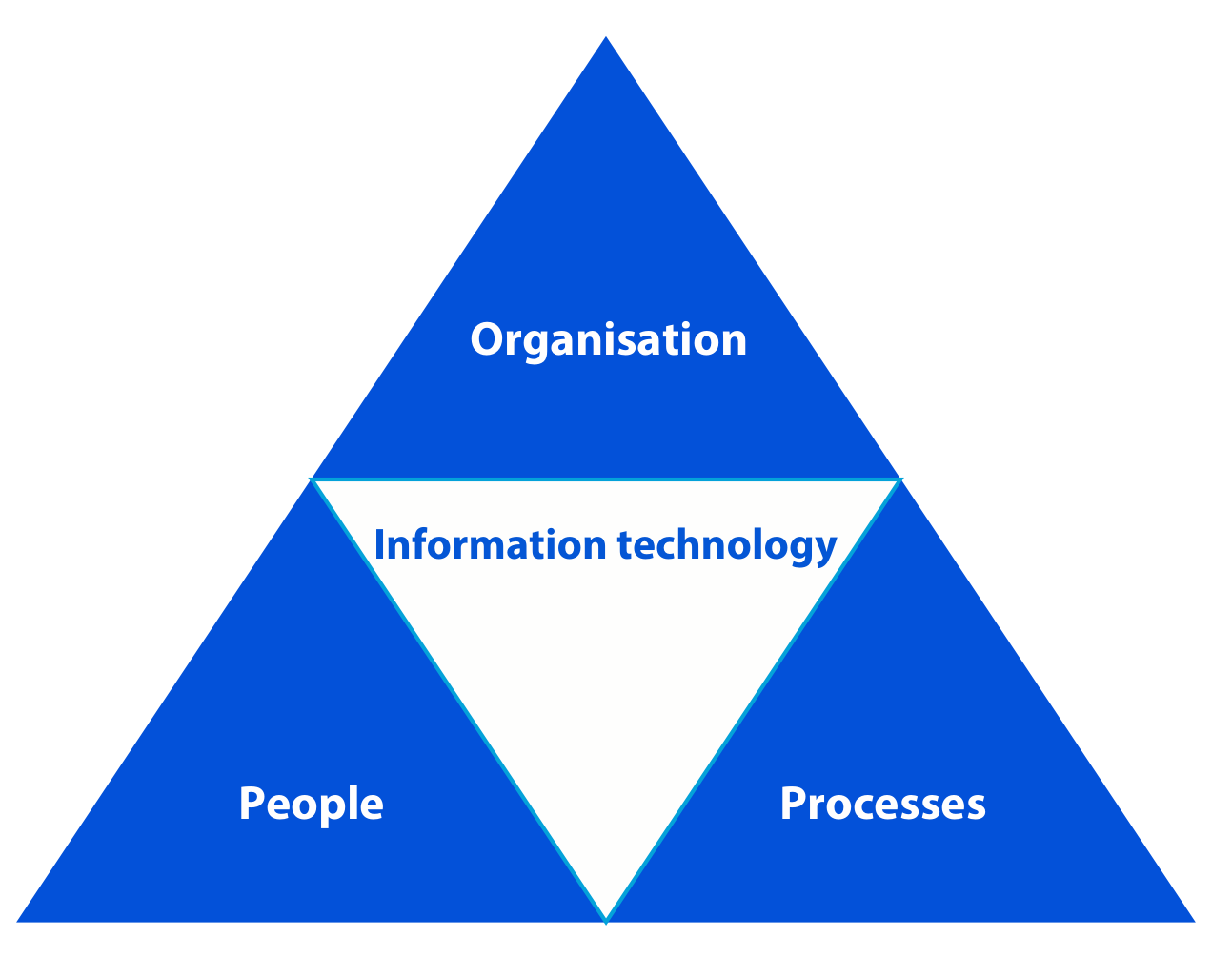
Organisation: Consider the organisational capabilities and structure and ensure that these are suitable.
Processes: How are the core business processes carried out? Analyse the value chain and understand the processes (activities) and their linkages.
People: Roles, job descriptions, competences, motivation, rewards, culture.
Information technology: IT architecture, IT capabilities, controls, software and information provision.
Of these four elements, ‘people’ is likely to be the most difficult to get right so successful human resource management (talent management) is vital.
Talent management includes:
Recruitment - the right number of people with the right skills
Training and development – so that skills are increased and kept up-to-date and relevant
Motivation – ensuring that staff are keen for the organisation and themselves to do well
Staff reviews and feedback - setting targets, reporting on performance, asking staff about difficulties and ambitions
Promotion – whom to promote, succession planning, talking to employees who missed out
Staff retention – good staff are difficult to find, expensive to train and new staff take time before they are fully productive. It is important to retain current employees who are performing well.
Dismissal – whether because of redundancy, poor performance or misconduct.
2.2 Difficulties with human resource management (talent management)
Human resource management is difficult because:
People (or human resources) are the only company assets that can leave in the evening and decide not to come back or, worse, decide to relocate to a rival company.
People are not machines and their performance varies depending on their mood, motivation and treatment within the organisation.
More and more jobs require higher skill levels and finding suitable people can be difficult.
A move from manufacturing to service industries means that more employees have more customer contact and therefore need better interpersonal skills.
In many countries, fewer young people are coming onto the market because birth rates have fallen.
If customers and clients are more diverse so must also be the workforce and companies have to reach out to widen their patterns of recruitment.
Greater job mobility means a greater recruitment burden to replace those who leave.
3 The Baldrige model for world class organisations
The Baldrige model for business performance excellence
This model can be depicted as:
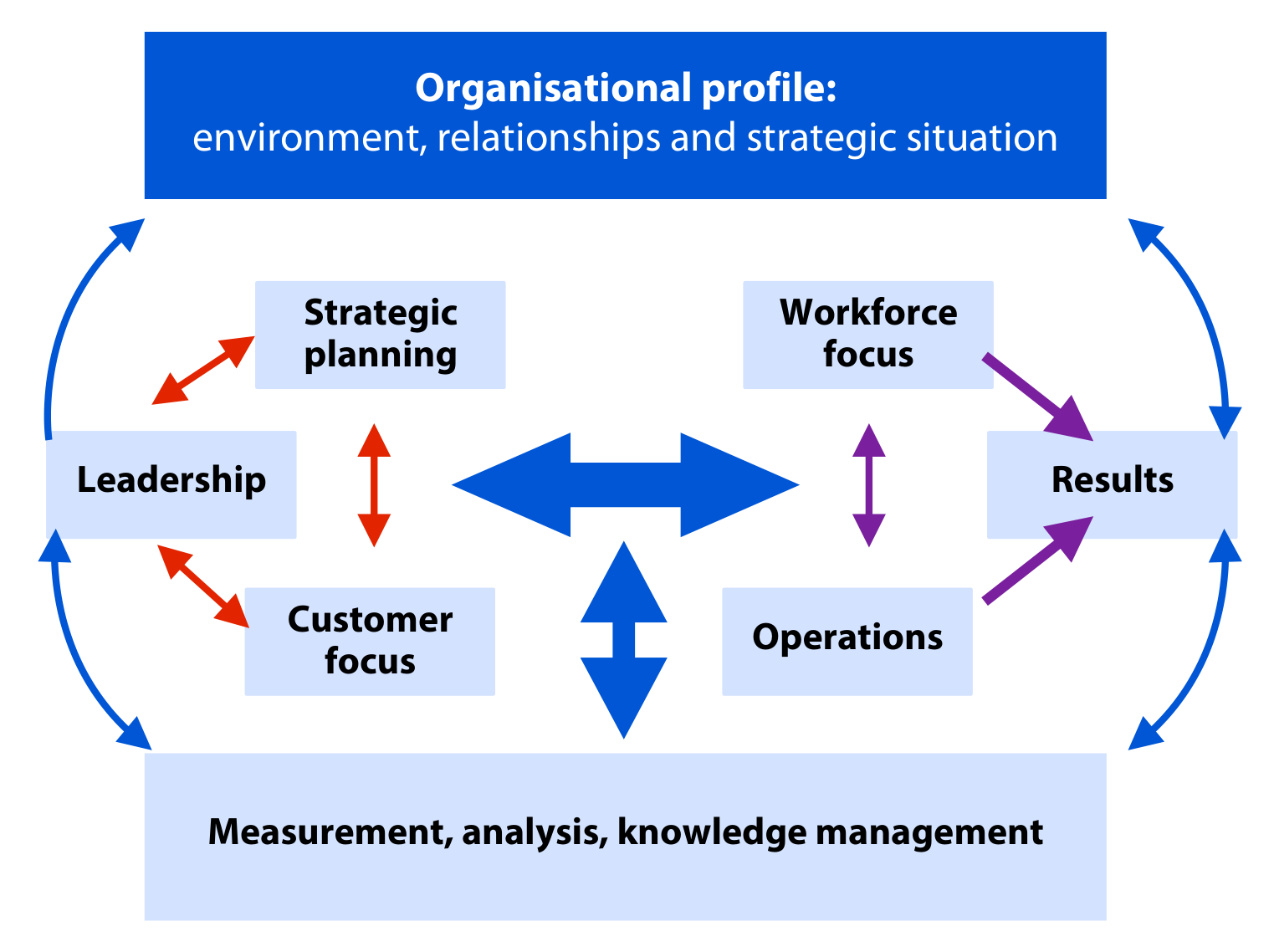
The model works as follows:
Baldrige elements | Examples |
Organisational profile: | |
This covers fundamental matters such as the organisation’s mission, values, the products offered, assets and regulatory requirements. It is really setting out the context of the organisation and it is the foundation of all that the organisation does. | A company might offer a high-end differentiated product, subject to a high level of regulations (eg a luxury car company). |
Leadership: | |
How do directors and managers direct the company? What is its corporate governance and will this maximise the chance of sustained success? | For example, a charismatic leader, like Steve Jobs of Apple, can have an influence on an organisation’s success. |
Strategic planning: | |
What is the strategic planning process? How are plans implemented, monitored and reviewed? | Is it formal or informal? How much effort is put into this? Does the organisation attempt to look ahead sufficiently far? |
Customer focus: | |
How does the organisation interact with its customers for sustainable success? This includes how customer requirements are discovered and how complaints are dealt with. How are relationships built with customers? How is information used to improve customer service and to identify opportunities? | Methods include market research, social media, user forums, customer surveys, loyalty programs, use of big data to discover trends and associations. |
Workforce focus: | |
How does the organisation assess staff capability and capacity requirements? | For example, if the company has decided to move up-market, there will be a major change on the type of staff needed and their training. |
Operations: | |
How does the organisation design, manage, improve and innovate its products and services? How is operational efficiency and effectiveness improved? | For example, a company might find it better to subcontract some processes to a firm that, because of specialisation, routinely achieves high quality at a low price. |
Measurement, analysis and knowledge management: | |
How does the company select, gather, analyse and manage its data, information, and knowledge assets? How does it learn and how does it manage its information technology? | Information should be the life-blood of a business and without it management is working in the dark. For example, the analysis of big data to uncover useful consumer trends. The provision of relevant information quickly enough to allow better decisions to be made is vital. |
Results: | |
This refers to the organisation’s performance in all key areas of its operations and, ultimately in its financial results. | It is important to set performance criteria and to compare actual results to targets.: profit, ROCE, market share, costs etc. Companies must choose KPIs that are relevant to success and investigations should be undertaken where there are material differences. |
4 Feasibility of changes
In addition, any proposed change has to be assessed for feasibility:
Economic feasibility
Technically feasibility
Operational feasibility
Socially acceptability