
Company Law: Liquidations

1 Liquidation
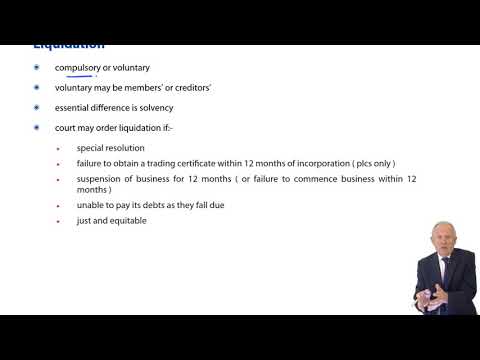
compulsory or voluntary
voluntary may be members’ or creditors’
essential difference is solvency
members’ voluntary liquidation – the company is solvent, the directors make a declaration of solvency and members pass a special resolution
creditors’ voluntary liquidation – the company is insolvent and creditors control the liquidator
court may order liquidation if:-
special resolution
failure to obtain a trading certificate within 12 months of incorporation (plcs only)
suspension of business for 12 months (or failure to commence business within 12 months)
unable to pay its debts as they fall due
just and equitable
2 Compulsory Liquidation
unable to pay its debts as they fall due
need to show the court that the company has owed the petitioning creditor more than £750 for more than 21 days
the debt should not be in dispute
just and equitable
failure of substratum
Re German Date Coffee Co.
deadlock on the board
Re Yenidji Tobacco
quasi-partnership situation
Ebrahimi v Westbourne Galleries
but just and equitable only given in the absence of alternative remedy (re A Company)
The figure is £750, not £700 — a distractor the examiner says tempts candidates who half remember it. Note who may petition, too: a member who can show it is just and equitable, and a creditor who can prove the company's assets are less than its liabilities, both may; the government may not. (LW GLO S22–A23 examiner's report, Example 4, pages 4–5.)
3 Administrator Appointed by the Court

application to the court by :-
members ordinary resolution, directors or by creditors
court may grant if:-
company is unable to pay its debts
the order, if granted, is likely to achieve the desired result
effect of an order
moratorium on company’s debts
powers of management passed to administrator
petitions for winding-up are dismissed
any administrative receiver already in office must step aside
4 Duties of an Administrator
an administrator acts as agent of the company, manages it and must act in the interests of creditors as a whole
so has fiduciary duties as well as legal
must send notice of appointment to creditors
must obtain a list of creditors
must send notice of appointment to registrar within 7 days
must require a statement of affairs
must identify appointment on all company business letters / correspondence
must prepare proposals for achievement of administration objectives
must manage the affairs of the company
5 Advantages of Administration Compared with Liquidation
company may continue after the process is completed
company is sheltered from creditors allowing time to design acceptable proposals
creditors are therefore prevented from applying for a liquidation
administrator can challenge previous transactions
creditors more likely to get some money back
members will hold shares in a viable company (possibly)
any creditor can apply to the court
a qualifying floating-charge holder may appoint an administrator
creditors (potentially) will have a continuing customer
directors could avoid acquiring the reputation of having been involved in an insolvent company
6 End of Administration Period
automatically ends:-
when successfully completed
12 months after appointment
application to court by administrator
application to court by a creditor
when original applicant is discovered to have had an inappropriate motive
administrator can apply to court
on determining that administration cannot be effective
the company should never have been in administration
(if appointed by the court) the administration has been successful
7 Sequence of distribution of assets in a liquidation
fixed-charge holders, from the charged asset
liquidation expenses
preferential creditors
the prescribed part from floating-charge realisations for unsecured creditors
floating-charge holders
unsecured creditors
shareholders last
Company Law: Liquidations
10 questionsAnswer the questions one at a time. Your progress is saved so you can leave and come back.
Open chapter practice