
Non-current assets held for sale and discontinued operations (IFRS 5)


1 Objective
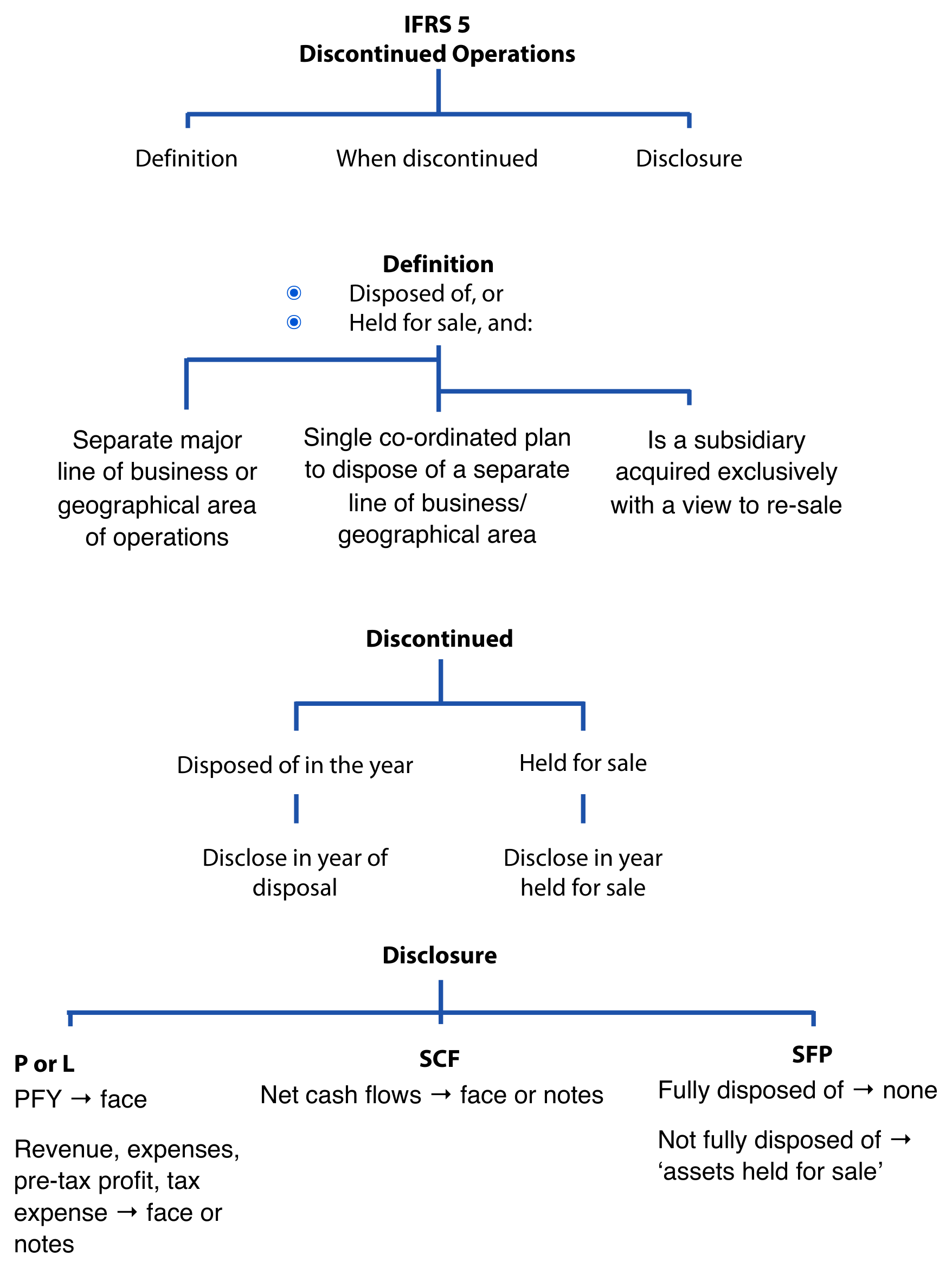
To require entities to disclose information about operations which have been discontinued during the accounting period
Improves the reader’s ability to interpret the results and to make meaningful projections
2 Non-current assets held for sale

A non-current asset held for sale is one where the carrying amount will be recovered principally through sale rather than through continuing use
A disposal group is a group of (net) assets to be disposed of in a single sale transaction
To be classified as ‘held for sale’ it must be:
Available for immediate sale in its present condition and,
Its sale must be highly probable
For a sale to be highly probable
Management must be committed to a plan to sell the asset
An active programme to locate a buyer and complete the plan must have been started
The asset must be being actively marketed at a price that is reasonable in relation to its current fair value
The sale should be expected to take place within twelve months from the date of classification as ‘held for sale ‘
It should be unlikely that significant changes to the plan will be made or that the plan will be withdrawn
Non-current asset held for sale is valued at the lower of the carrying value and fair value less costs to sell. Any reduction in value is recorded as an impairment through profit or loss.
Work in the order the standard sets. Depreciate the asset up to the date it meets the criteria — and remeasure it under its normal model if it is a revalued asset — and only then compare that carrying amount with fair value less costs to sell, taking the lower. If the carrying amount is already the lower of the two, that is the amount carried, and a later rise in fair value less costs to sell does not increase it. Starting straight at fair value less costs to sell, and skipping the part-year depreciation, is the usual way these marks go.
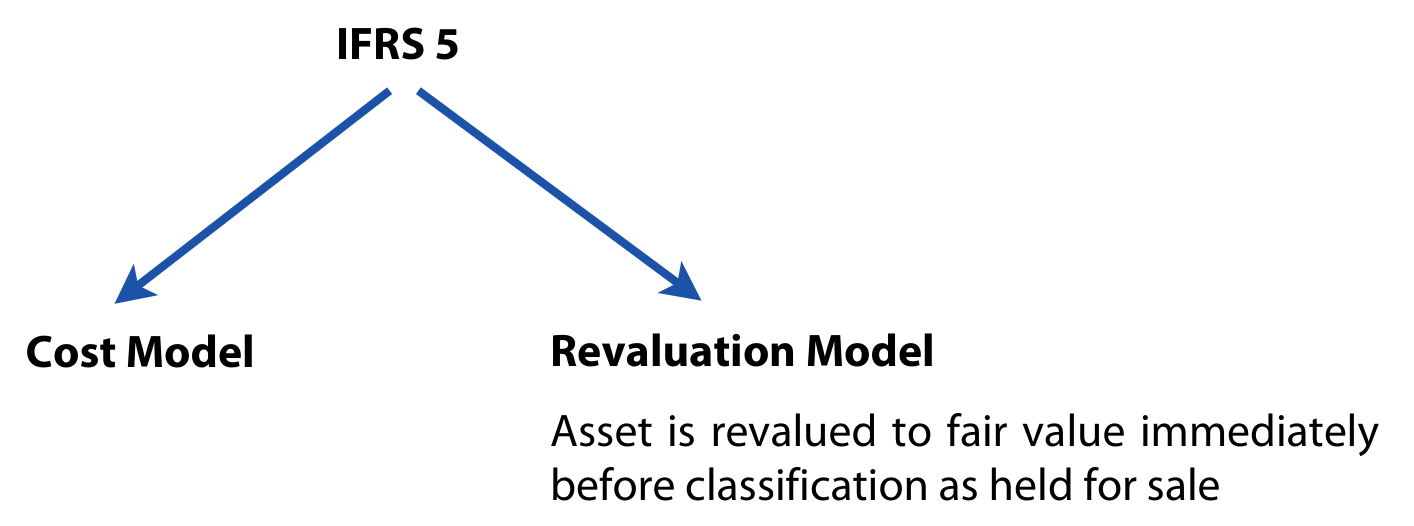
Once classified as a non-current asset held for sale it is no longer depreciated.
The subsequent sale of the asset will give rise to a profit/loss on disposal.
NCA-HFS
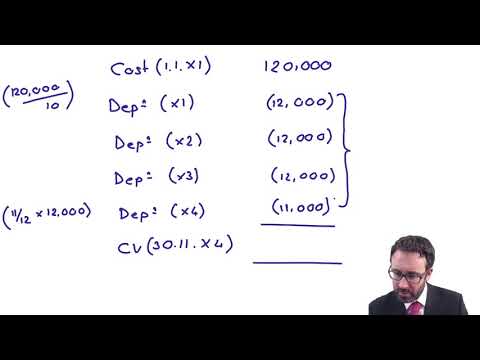
York bought an asset at a cost of $120,000 on 1 January 20X1 and depreciated it straight line over 10 years. The asset’s residual value is nil and depreciation is charged pro-rate on a monthly basis.
On 30 November 20X4, York classified the asset as a non-current asset held for sale in accordance with the rules of IFRS 5 Discontinued operations and non-current assets held for sale. At that date the fair value of the asset was $70,000 and the costs to sell were $2,000.
The asset had not been sold by the 31 December 20X4 reporting date.
Prepare extracts from the financial statements for the year-ended 31 December 20X4.
Show answerHide answer
3 Discontinued operations
Discontinued operations
Angola’s car manufacturing operation has been making substantial losses. Following a meeting of the board of directors, it was decided to close down the car manufacturing operation on 31 March 20X6. The company’s reporting date is 31 December and the car manufacturing operation is treated as a separate operating segment.
Explain how the decision to close the car manufacturing operation should be treated in Angola’s financial statements for the years ending 31 December 20X5 and 20X6.
Show answerHide answer
Discontinued operations
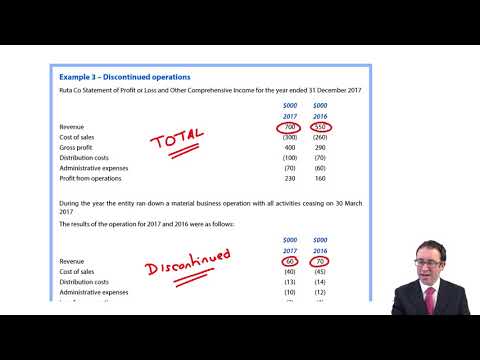
Ruta Co Statement of Profit or Loss and Other Comprehensive Income for the year ended 31 December 2017
$000 | $000 | |
2017 | 2016 | |
Revenue | 700 | 550 |
Cost of sales | (300) | (260) |
Gross profit | 400 | 290 |
Distribution costs | (100) | (70) |
Administrative expenses | (70) | (60) |
Profit from operations | 230 | 160 |
During the year the entity ran down a material business operation with all activities ceasing on 30 March 2017
The results of the operation for 2017 and 2016 were as follows:
$000 | $000 | |
2017 | 2016 | |
Revenue | 60 | 70 |
Cost of sales | (40) | (45) |
Distribution costs | (13) | (14) |
Administrative expenses | (10) | (12) |
Loss from operations | (3) | (1) |
The entity made gains of $7,000 on the disposal of non-current assets of the discontinued operation. These have been netted off against administrative expenses.
Prepare the Statement of Profit or Loss and Other Comprehensive Income for the year ended 31 December, 2017 for Ruta Co, complying with the provisions of IFRS 5, disclosing the information on the face of the Statement of Profit or Loss and Other Comprehensive Income. Ignore taxation.
Show answerHide answer
Non-current assets held for sale (IFRS 5)
10 questionsAnswer the questions one at a time. Your progress is saved so you can leave and come back.
Open chapter practice