
Group Accounts – The Consolidated Statement of Profit or Loss


1 Introduction
We have seen in the previous chapters that when one company controls another it is necessary for us to prepare a Consolidated Statement of Financial Position.
Similarly it is necessary for us to prepare a Consolidated Statement of Profit or Loss and we will look at how this is prepared in this chapter.
2 The Principles
As with the Consolidated Statement of Financial Position, the aim of the Consolidated Statement of Profit or Loss is to show the results of the group as if it were a single entity.
We will use the same principles as we applied for the Statement of Financial Position in that we will show the total profits made by the group and then show the extent to which these profits are owned by the parent company and are owned by the non-controlling interest.
P acquired 80% of the share capital of S on that company’s incorporation in 2008.
The respective Statements of Profit or Loss of the two companies for the year ended 31 December 2009 are as follows:
P | S | ||
Revenue | 52,000 | 24,000 | |
Cost of sales | 12,000 | 10,000 | |
Gross profit | 40,000 | 14,000 | |
Expenses | 8,000 | 4,000 | |
Profit before taxation | 32,000 | 10,000 | |
Income tax | 12,000 | 3,000 | |
Profit for the year | 20,000 | 7,000 | |
Note: movement on retained earnings | |||
Retained earnings brought forward | 80,000 | 20,000 | |
Profit for the year | 20,000 | 7,000 | |
Retained earnings carried forward | 100,000 | 27,000 |
Show answerHide answer
In the previous example, P acquired S on the date of S’s incorporation and is therefore entitled to its share of all S’s retained earnings.
However, if P acquired S at a later date then P is only entitled to its share of S’s post-acquisition retained earnings (just as when we prepared the Consolidated Statement of Financial Position).
P acquired 60% of S on 1 January 2008, at which date the retained earnings of S were $8,000.
The respective Statements of Profit or Loss of the two companies for the year ended 31 December 2010 are as follows:
P | S | ||
Revenue | 85,000 | 31,000 | |
Cost of sales | 21,000 | 12,000 | |
Gross profit | 64,000 | 19,000 | |
Expenses | 12,000 | 7,000 | |
Profit before taxation | 52,000 | 12,000 | |
Income tax | 16,000 | 4,000 | |
Profit for the year | 36,000 | 8,000 | |
Note: movement on retained earnings | |||
Retained earnings brought forward | 120,000 | 17,000 | |
Profit for the year | 36,000 | 8,000 | |
Retained earnings carried forward | 156,000 | 25,000 |
Show answerHide answer
3 Inter entity (or intra-group) trading
Just as with the Consolidated Statement of Financial Position, the Consolidated Income Statement should show the results of the group as though it were a single entity.
When one company in the group sells goods to another company in the group, then the sales will have been included in the revenue of the selling company and an identical amount will have been included in the cost of sales of the other company. However, as far as the group’s dealings with outsiders is concerned, no transaction has taken place.
In the Consolidated Statement of Profit or Loss, the figure for sales revenue should represent sales to outsiders, and the figure for cost of sales should represent purchases from outsiders. We will therefore need to reduce both the sales revenue and the cost of sales by the value of the inter entity sales during the year.
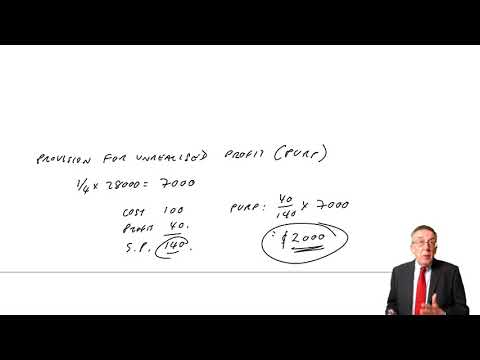
You will also remember from the previous chapter that if any goods sold at a profit within the group are still in inventory, then the unrealised profit needs to be excluded from the group profit.
We will achieve this (i.e. reduce the group profit) by increasing the cost of sales for the group by the amount of the unrealised profit in inventory.
P acquired 55% of S on 1 June 2008.
The Statements of Profit or Loss for the two companies for the year ended 31 May 2009 are as follows:
P | S | ||
Revenue | 120,000 | 110,000 | |
Cost of sales | 55,000 | 50,000 | |
Gross profit | 65,000 | 60,000 | |
Expenses | 9,000 | 10,000 | |
Profit before taxation | 56,000 | 50,000 | |
Income tax | 20,000 | 14,000 | |
Profit for the year | 36,000 | 36,000 |
Show answerHide answer
Group Accounts The Consolidated Statement of Profit or Loss
5 questionsAnswer the questions one at a time. Your progress is saved so you can leave and come back.
Open chapter practice