
MA1
The use of ledgers and prime entry records
CAT MA1 Course Notes Contents Page

The use of ledgers and prime entry records in both integrated and interlocking accounting systems
The word ‘ledger’ means a book. In accounting systems there are usually three ledgers:- The general or nominal ledger, which records all the ‘T’ accounts, such as wages, sales, purchases, electricity, travel, advertising, rent, insurance, repairs, receivables, payables and non-current assets. The cash and bank accounts are technically part of this ledger but are usually physically kept in a separate book because cash and bank transactions are so numerous.
- The payables ledger (also known as the creditors’ ledger and sometime the purchase ledger). Although the total amount owed to suppliers is recorded in the general ledger, details of exactly what is owed to whom are also recorded here. There is a separate account for each supplier. The sum of the amounts owing in this ledger should agree with the payables balance in the general ledger.
- The receivables ledger (also known as the debtors’ ledger and sometimes the sales ledger). Although the total amount owed by customers is recorded in the general ledger, details of exactly what is owed from whom are also recorded here. There is a separate account for each credit customer. The sum of the amounts owing in this ledger should agree with the receivables balance in the general ledger.
- The cash book: this records amounts paid into and out of the bank account
- The petty cash book: this records small amounts of cash paid for day to day expenses, such as buying postage stamps and teas or coffee for the office.
- The sales day book: sales invoices issued to credit customers
- The purchases day book: purchase invoices received from suppliers
- The journal: where adjustments, such as correcting errors, are first recorded.
The functions and benefits of a computerised accounting system
Most accounting information is numerical and, of course, computers excel at dealing with that type of data. Computerised accounting systems should offer the following advantages over manual systems:- faster provision of information
- provision of information that would not be easily available without a computerised accounting system
- once the system is set up, cheaper information
- more accurate information because arithmetic and certain other errors will be eliminated.
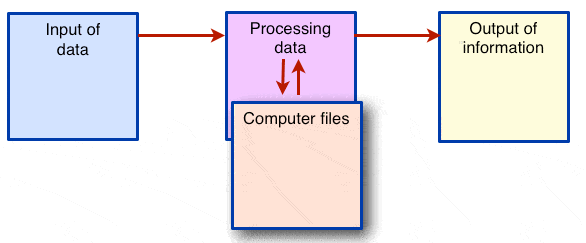
A computerised accounting system can be represented as:
Comments
Be the first to leave a comment.
Leave a comment