Skip to content

Group statement of cash flows

VIVA Subject Guide
YouTube video

1.1 Consolidated statement of cash flows for the year ended [date]

$m

$m

Operating Activities

Operating profit

X

Depreciation

X

Impairment

X

Gain/Loss on Disposal of Tangibles

(X)/X

Gain/Loss on Sale of Subsidiary

(X)/X

Inventory

(X)/X

Receivables

(X)/X

Payables

X/(X)

Cash generated from operations

X

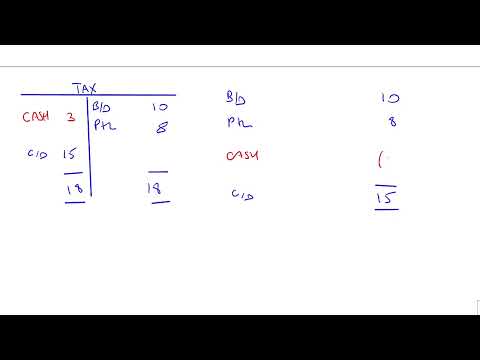
Tax Paid

(X)

Cash generated from operating activities

X

Investing Activities

Sale Proceeds from Tangibles

X

Purchase of Tangibles

(X)

Dividend Received from Associate

X

Acquisition/Disposal of Sub

(X)/X

Interest received

X

Dividends Received

X

Cash generated from investing activities

X

Financing Activities

Proceeds from Share Issue

X

Loan Issue/Repayment

X/(X)

Interest paid

(X)

Dividend paid to NCI

(X)

Dividend paid to parent shareholders

(X)

Cash generated from financing activities

X

Change in cash and cash equivalents

X/(X)

Opening cash and cash equivalents

X

Closing cash and cash equivalents

X

2 Dividend paid to the non-controlling interest

YouTube video

Non-controlling interest

B/f

X

Dividend paid (β)

X

Profit

X

Disposal of sub.

X

Acquisition of sub.

X

C/f

X

X

X

Example 1 – Dividend paid to non-controlling interest

Group statement of profit or loss for the year-ended 31 December 2015 (extract)

$m

Profit before tax

91

Taxation

(31)

Profit for the year

60

Attributable to:

Ordinary shareholders of the parent

54

Non-controlling interest

6

Group statement of financial position as at 31 December 2015 (extract)

2015
$m

2014
$m

Equity

Non-controlling interests

115

110

Calculate the dividend paid to the non-controlling interests to appear in the group statement of cash flows for the year-ended 31 December 2015.

Show answerHide answer

Example Answer 1

Non-controlling interest

B/f

110

Dividend paid (β)

1

Profit

6

C/f

115

116

116

3 Dividend received from associate

YouTube video

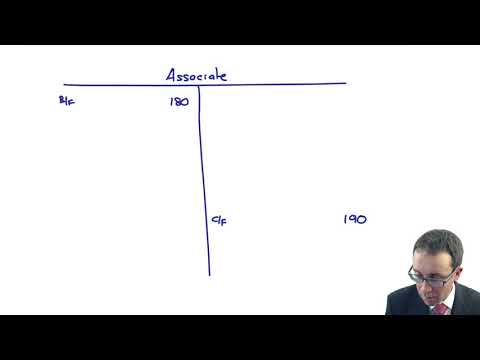
Associate

B/f

X

Profit

X

Dividend paid (β)

X

C/f

X

X

X

Example 2 – Dividend received from associate

Group statement of profit or loss for the year-ended 31 December 2015 (extract)

$m

Operating profit

83

Finance costs

(12)

Share of profit of associate

20

Profit before tax

91

Taxation

(31)

Profit for the year

60

Attributable to:

Ordinary shareholders of the parent

54

Non-controlling interest

6

Group statement of financial position as at 31 December 2015 (extract)

2015
$m

2014
$m

Assets

Non-current assets

Investment in associate

190

180

Calculate the dividend received from associate to appear in the group statement of cash flows for the year-ended 31 December 2015.

Show answerHide answer

Example Answer 2

Associate

B/f

180

Profit

20

Dividend paid (β)

10

C/f

190

200

200

4 Acquisition/disposal of subsidiary

YouTube video

The acquisition or disposal of a subsidiary during the year is shown as a net cash outflow or inflow within investing activities to show the net cash paid to acquire the subsidiary or net cash received on disposal of a subsidiary.

An indirect adjustment is also required to adjust for any other balances (e.g. PPE, inventory, receivables, and payables) consolidated as part of the acquisition or disposed of as part of the disposal.

Only cash movements enter this statement. Borrowings that arrive inside an acquired subsidiary’s net assets, and the liability recognised when a lease begins, are non-cash and appear nowhere in it. Where there is both a new loan and a repayment, present the inflow and the outflow separately rather than one net figure.

Working capital movement

Inventory

Receivables

Payables

Opening

X

X

X

Acquisition/(disposal)

X/(X)

X/(X)

X/(X)

Expected

X

X

X

Closing (actual)

X

X

X

Movement

↑or ↓

↑or ↓

↑ or ↓

Example 3 – Acquisition of a subsidiary

Pablo Group statement of financial position as at 31 December 2015 (extract)

2015
$m

2014
$m

Non-current assets

Property, plant and equipment

520

490

Current assets

Inventory

145

195

Receivables

130

109

Cash and cash equivalents

50

75

Current liabilities

Trade payables

85

67

The following information relates to the financial statements of the Pablo Group:

On 1 June 2015, Pablo acquired all of the share capital of Juan for $50 million.

The fair value of the identifiable net assets and liabilities at the date of acquisition that have been reflected in the year-end balances of the Pablo Group are as follows:

$m

Property, plant and equipment

15

Inventory

8

Receivables

6

Cash and cash equivalents

5

Payables

(3)

Show how the above would be dealt with in the consolidated statement of cash flows for the year-ended 31 December 2015.

Show answerHide answer

Example Answer 3

2015 $m
Operating activities
Increase in inventory (W)
Increase in receivables (W)
Increase in payables (W)
Investing activities
Acquisition of subsidiary, net of cash (50 – 5)

Working capital movement

InventoryReceivablesPayables
Opening
Acquisition/(disposal)
Expected
Closing (actual)
Movement58↓15 ↑15 ↑
YouTube video

Example 4 – Group statement of cash flows

The following draft group financial statements relate to Dove, a public limited company.

Dove Group statement of financial position as at 31 December 2015

2015
$m

2014
$m

Assets:

Non-current assets

Property, plant and equipment

1,745

1,250

Goodwill

1,184

1,230

Investment in associate

200

190

3,129

2,670

Current assets:

Inventory

530

580

Receivables

456

390

Cash and cash equivalents

190

230

1,176

1,200

Total assets

4,305

3,870

Equity and liabilities:

Share capital

1,700

1,500

Retained earning

1,060

900

2,760

2,400

Non-controlling interest

575

540

3,335

2,940

Non-current liabilities

Long-term borrowings

300

200

Deferred tax

220

190

Current liabilities

Trade payable

300

430

Current tax payable

150

110

450

540

Total liabilities

970

930

Total equity and liabilities

4,305

3,870

Dove group statement of profit or loss for the year-ended 31 December 2015

$m

Revenue

1,765

Cost of sales

(1,185)

Gross profit

580

Distribution costs

(100)

Administrative expenses

(90)

Operating profit

390

Finance costs

(55)

Share of profit of associate

40

Profit before tax

375

Taxation

(95)

Profit for the year

280

Dove group statement of changes in equity for the year-ended 31 December 2015

Equity
shares

Retained
earnings

NCI

Total

$m

$m

$m

$m

B/f

1,500

900

2,400

540

2,940

Issue of share capital

200

200

200

Dividends

(65)

(65)

(20)

(85)

Total comprehensive income for the year

225

225

55

280

Transfer to retained earnings

C/f

1,700

1,060

2,760

575

3,335

The following information relates to the financial statements of the Dove Group:

  • On 1 June 2015, Dove acquired all of the share capital of Fred for $50 million. The fair value of the identifiable net assets and liabilities at the date of acquisition that have been reflected in the year-end balances of the Dove Group are as follows:

$m

Property, plant and equipment

13

Inventory

20

Receivables

15

Cash and cash equivalents

3

Payables

(9)

42

Goodwill arising on this transaction was $8m.

  • Dove owns 20% of an associate. The associate made a profit for the year of $200 million and paid a dividend of $150 million.

  • During the year Dove charged depreciation of $130 million on its property, plant and equipment. It sold property, plant and equipment with a carrying value of $43million for $50 million

Calculate the following balances to be included in the Dove Group statement of cash flows for the year-ended 31 December 2015: (i) Cash generated from operations, (ii) Net cash paid to acquire the subsidiary, (iii) Dividend paid to the non-controlling interests, and (iv) Dividend received from the associate.

Show answerHide answer

Example Answer 4

(i)

$m
Operating Activities
Operating profit
Depreciation
Impairment (1230 + 8 - 1184)
Profit on disposal of PPE
Inventory
Receivables
Payables
Cash generated from operations

(ii) Net cash on acquisition of the subsidiary = $47 million

Cash paid to acquire subsidiary = $50 million

Less: cash in subsidiary = $3 million

Net cash = $47 million

(iii) Dividend paid to the non-controlling interests = $20 million

(iv) Dividend received from associate = $30 million

Associate

B/f

190

Profit

(20% x 200)

40

Dividend paid (β)

30

C/f

200

200

200

Workings

Working capital movement

InventoryReceivablesPayables
Opening
Acquisition
Expected
Closing (actual)
Movement70↓51↑139↓

5 Other cash flow issues

YouTube video

Format

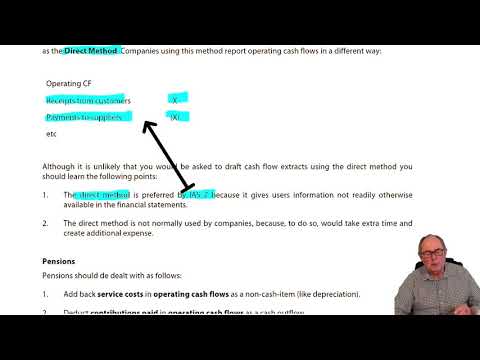
You will remember from your FR studies that there is an alternative format for cash flow statements known as the Direct Method. Companies using this method report operating cash flows in a different way:

Operating CF

Receipts from customers

X

Payments to suppliers

(X)

etc

Although it is unlikely that you would be asked to draft cash flow extracts using the direct method you should learn the following points:

  1. The direct method is preferred by IAS 7 because it gives users information not readily otherwise available in the financial statements.

  2. The direct method is not normally used by companies, because, to do so, would take extra time and create additional expense.

Pensions

Pensions should de dealt with as follows:

  1. Add back service costs in operating cash flows as a non-cash-item (like depreciation).

  2. Deduct contributions paid in operating cash flows as a cash outflow.

IFRS 18 requires that:

  • Interest received and dividends received MUST be classified as INVESTING activities.

  • Interest paid and dividends paid MUST be classified as FINANCING activities.

  • Where the indirect method is used, the cash flow statement must start with OPERATING PROFIT.