
Life-cycle costing


1 Introduction
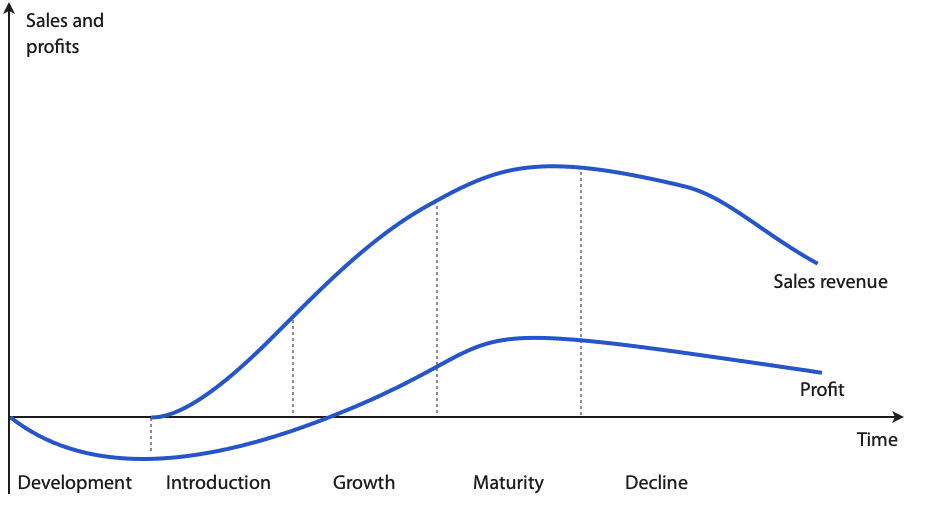
The costs involved in making a product, and the sales revenues generated, are likely to be different at different stages in the life of a product. For example, during the initial development of the product the costs are likely to be high and the revenue minimal – i.e. the product is likely to be loss-making.
If costings (and decisions based on the costings) were only to be ever done over the short term it could easily lead to bad decisions.
Life-cycle costing identifies the phases in the life-cycle and attempts to accumulate the costs over the entire life of the product.
2 The product life cycle
2.1 The product life cycle may be divided into five phases:
Development
Introduction
Growth
Maturity
Decline
The effect of these can be illustrated diagrammatically as follows:
2.2 Maximising the return over the product life cycle
Design costs out of products
Minimise the time to market
Minimise breakeven time
Maximise the length of the life span
The cost per unit in a life-cycle question is every cost of the whole life — development, fixed and end-of-life costs as well as production — divided by every unit expected over the whole life, not the units of one year. A required mark-up or profit is then added to that figure.

A company is planning a new product. Market research suggests that demand for the product would last for 5 years. At a selling price of $10.50 per unit they expect to sell 2,000 units in the first year and 12,000 units in each of the other four years.
The company wishes to achieve a mark up of 50% on cost.
It is estimated that the lifetime costs of the product will be as follows:
Manufacturing costs - $6.00 per unit
Design and development costs - $60,000
End of life costs - $30,000
Calculate:
the target cost for the product.
the lifecycle cost per unit and determine whether or not the product is worth making.
It has been further estimated that if the company were to spend an additional $20,000 on design, then the manufacturing costs per unit could be reduced.
If the additional amount on design were to be spent, calculate the maximum manufacturing cost per unit that could be allowed if the company is to achieve the required mark-up.
Life-cycle costing
7 questionsAnswer the questions one at a time. Your progress is saved so you can leave and come back.
Open chapter practice