ACCA Forums
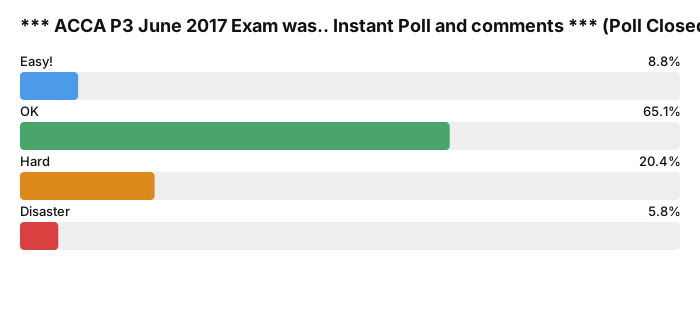
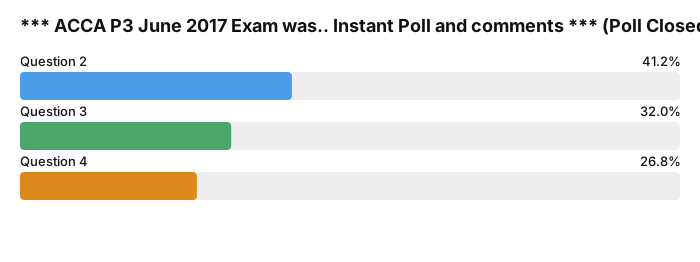
SBL*** ACCA P3 June 2017 Exam was.. Instant Poll and comments ***
Question 1 seemed easy but it was quite weird in the end. After reading the requirements of PESTEL and 5 forces, I was delighted, but my mood slowly changed after reading the case study. Did anyone have problems identifying Environmental factors? There weren't that many in there compared to socio cultural, which had much more. I linked MFPs strengths of 'energy efficient' and great customer service to the green consumers which also wanted a personal touch. MFP had the best customer service and that does mean having a good personal touch right? The fact that MFP were poor with it's technology, I used the pension payroll bit against them, saying they need to implement a system which will increase costs. Did anyone do the same?
For the projects question I think I waffled too much and wrote down everything project related. Do you think if you wrote things for the project plan section but they are relevant to previous question, like the business case, you will get marks for it? I doubt it.
For the financial analyses, I used Receivable days, payable days, ROCE, Gearing ratio, current ratio, GP and NP, and staff to revenue. Basically explained the company had major liquidity problems, they made staff redundant as they couldn't afford to pay wages, this saved costs which paid off loans and suppliers (to bring down the payables days), they also sold non current assets (PPe) and cash went down from 20 to 5 if I remember correctly. I also mentioned that receivable days has gone down, meaning the company has strengthened it's credit control and this could mean they will ask for funds sooner from SOP, or ask for money up front due to their liquidity issue.
For section B I struggled to think of other factors and I ran out of time. Hope I did enough!
Question 1 seemed easy but it was quite weird in the end. After reading the requirements of PESTEL and 5 forces, I was delighted, but my mood slowly changed after reading the case study. Did anyone have problems identifying Environmental factors? There weren't that many in there compared to socio cultural, which had much more. I linked MFPs strengths of 'energy efficient' and great customer service to the green consumers which also wanted a personal touch. MFP had the best customer service and that does mean having a good personal touch right? The fact that MFP were poor with it's technology, I used the pension payroll bit against them, saying they need to implement a system which will increase costs. Did anyone do the same?
For the projects question I think I waffled too much and wrote down everything project related. Do you think if you wrote things for the project plan section but they are relevant to previous question, like the business case, you will get marks for it? I doubt it.
For the financial analyses, I used Receivable days, payable days, ROCE, Gearing ratio, current ratio, GP and NP, and staff to revenue. Basically explained the company had major liquidity problems, they made staff redundant as they couldn't afford to pay wages, this saved costs which paid off loans and suppliers (to bring down the payables days), they also sold non current assets (PPe) and cash went down from 20 to 5 if I remember correctly. I also mentioned that receivable days has gone down, meaning the company has strengthened it's credit control and this could mean they will ask for funds sooner from SOP, or ask for money up front due to their liquidity issue.
For section B I struggled to think of other factors and I ran out of time. Hope I did enough.
it was more than just the ratios you could have commented on the moving is revenue, cost of sale, administrative cost, and did any one take note of the movement in the number of staff.
in addition to the current ratio comment should also me made of the non-current asset most of it was made up of goodwill
the environmental issue was about the green customers and the concerns about the effect of non degradable products have on the environment it also talk about the research that was conducted
I wouldn't get overly bogged down about the environmental factors even if you mentioned them under social it's fine as the tool is sometimes called a 'PEST' analysis where all environmental factors are in Social factors and all legal are under government.
What really matters is your analysis. Did you mention why that factor is significant? Did you link it back to the effect on the company's strengths and weaknesses?
Likewise with five forces it's all about justifying your analysis and why you think Customer power might be high or why you think supplier power is low. Even if the examiner disagrees with you, you will still be given credit if you were able to justify why you though supplier power was high, if really it's low.
I put down competitive rivalry as high, customer power high, supplier power low, substitutes high and threat of entrants low.
Now it could well be that TOE is high. But even so I justified why I thought it was low because I said that we see the two new entrants are staring to struggling and the high levels of competition will put new companies off. I also mention how more focus on marketing and price wars will build up barriers to entry. So you see even if the model answer says threat of entry is high, I still will get some credit because I justified why I deemed it low in my analysis. That's what you got to do.
Was there threat of subtitute low in potor 5 forces i wrote that it was low because of supermaket all the products are available in all the supermarkets and there will be differnce in quality and price therefore threat for subtitiute will be low is this right explaination
Hi All,
hope you all will go through P3 this time.
Anyone can advise what question/topic was examined in March 2017 and December 2016
this may help me to pick some important topic for the exam September 2017sitting.
Thank you in anticipation
I raised the point that the software company had acquired loans to pay back suppliers (not good). Their PPE had decreased from 60k to 40k so raising finance not to invest in (profit generating) assets was a signal of dangers ahead. Effectively they were swapping more expensive debt (long term loans) with cheaper debt (creditor days) - therefore interest cover reduced and likelihood of attracting future inward investment (which may be required based on decrease in profitability) unlikely due to financial risk increasing (higher liquidity, higher gearing etc).
Agreed though - I would like to have seen more problems with them!
Q1. a. Political: government policy towards payroll system-higher wages and costs
Environmental: green consumers, green supermarkets
Social: recession i think so, lifestyle changes
Legal: law over disabled people- staff service (Strength), small supermarkets(Weakness)
b.Porter's 5 forces
Buyers power: bargaining power for lowprices better quality, undiferentiated products, low switching costs
suppliers power: high prices,long term contracts
competition: three large chains, cooperative markets for company
substitute products
new erntrants: threats of economies of scale-large chains reduce costs
distribution threat
legal threats like fines of new law for disable people
c. CSF resources and competences of company and analysis, integrated reporting
Q2. a. ratio analysis of Itrus software company
NPM decrease-high admin costs at second year
ROCE decrease i thing so
Receivables decrease but still high days at 92 days if i remember well
payables decrease at 40-pay fast the suppliers means cash flow problems
decrease PPE
staff decrease at half-redundancy problems, bad name for company, no motivated employees
increase debt ratio due to increase of long term liabilities, loans
b. compatibility, new software ERP match with currentsoftware
training of employees over new software
after saleservice, maintenance of software
staff motivation readiness to new software changes
supplier name and reliability in industry
supplier continuing of operations,financial perfoirmance
software checks updating etc
Q4. a. price skimming, penetration pricing,cost plus margin
lock in suppliers with promotion schemes like replacement of used cars etc
differentiated pricing: new cars both charging option offered to new segmentsand markets like green
consumers
b. evaluation of pricing strategy: used SAF
Suitability of company environment strengts to introduce high price for new car
Acceptability by major stakeholders for high price-shareholders increase profits, green consumers available to pay a premium
Feasibility to high price for new car as company has the resources as staff expert and products diversification and resources like good financial position to introduce high price
c. promotion like advertisements to car magazines and except from traditional push promotion use pull promotion through websites notifications, videos, emails etc
place: sell cars all over the world through internet e-commmerce etc
physical evidence: car test drives, pictures of cars, videos
Hope to pass this time at least with 50%. Hope the same to all here!
I thought the questions were fairly easy considering I had the syllabus down after so much revision. But then managing the time available and getting all the information into succinct yet appropriate answers is always quite tricky on these types of exams. I spent 2 hours on Q1 (as I did for P1 after promising myself I wouldn't!) and whilst I managed to finish Q2 & Q3, I didn't do much of the 10 mark part on Q1.
Fingers crossed though, I do think I managed to get a lot of the syllabus in and related it to the questions. After P1 and P3 in succession, I need a calculation based exam!
@rogman228 said: Here are two analysis of the UK supermarket industry that aren't too dissimilar to what the case would of been in our Question 1. Porter's five forces: https://www.scribd.com/mobile/doc/55821713/Final-Porter-s-Five-Forces-Model-for-UK-Supermarket-Industry Five forces and PESTEL: https://www.ivoryresearch.com/samples/business-essay-example-tesco-swot-pestel-porter-five-forces-and-value-chain-analysis/Thanks for this, its a great comfort !! Fingers crossed now :-)
I think you probably do need to say if the power is low or high but you would still get marks for all the other points you made
@vnoonanirl said: I think you probably do need to say if the power is low or high but you would still get marks for all the other points you madeYou're welcome regarding the posting of the 5 forces analysis. And yes you're right here. You get half a mark for correctly identified the power, but that is about it. Source : https://www.accaglobal.com/ie/en/student/exam-support-resources/professional-exams-study-resources/p3/technical-articles/p3-marker1.html
@chullbulla said: Here I lost more 2.5 marks :(Markers are sometimes given a good amount of flexibility in their marking for P3 so if you made lots of good points and more less hinted to what the power is in your answer it may not be a case of 2.5 marks lost. Depends on the how much flexibility markers are given I suppose. Anyways nothing can be done now, let's wait until July and hope for the best.
With regards to question 2a I think it was also important to mention that there were no industry ratios which could have been used to juxtapose the company's performance with that of the whole industry to further deduce a clearer picture of the company's financial situation.
Moreover for question 4b I used the 5 C's (components affecting price) being corporate objectives (and there was a reference to the mission statement in the question), cost, control, competitors and customers.
When is examiner report showing up?
@sa1pw said: When is examiner report showing up?I've used the 5Cs as well Because they were asking evaluation on Strategic Pricing and not the Strategy.
Sign into reply to this topic.