
Skip to content

ACCA Forums

TX*** ACCA F6 June 2017 Exam was.. Instant Poll and comments ***

Oopentuition_teamAdmin9y ago

Please vote in our Instant Polls about the ACCA F6 June 2017 Exam
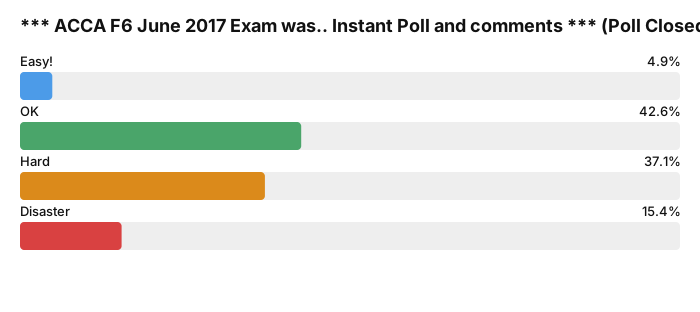
*** ACCA F6 June 2017 Exam was.. Instant Poll and comments *** poll results Post your comments about the ACCA F6 exam below (comments will open after 5pm UK)
JJulia9y ago#31
I wasn't sure about this one! I think I went for deemed occupation for both in the end?
KKhalood9y ago#32
Same!
@nathrh said: I went for first one deemed as up to 4 years elsewhere in the U.K. Second one not occupied
JJulia9y ago#33
@khaloodk said: Same!
Oh no :( That's another one wrong for me then... Why did you think the second one was not occupied? I thought that she lived with her parents hence up to 3 years for any reason? :(
Aaiamakki9y ago#34
I think both of them are not as he stayed 4 years in UK but he did not return back before sale
JJulia9y ago#35
@aiamakki said: I think both of them are not as he stayed 4 years in UK but he did not return back before sale
Oh that's right! I completely forgot to check if she returned to live there... :( Oh well... There is always September...
KKhalood9y ago#36
i think i messed up here. That complete question went bad for me
@aiamakki said: I think both of them are not as he stayed 4 years in UK but he did not return back before sale
Jjoyo9y ago#37
The entertaining of overseas customers is allowed but not customers in the UK. Additionally, the other part of that question asked about which impairment loss(bad debt was applicable.) The 520 from August is correct. It has to be older than 6 months to be written off. Question 1 - Indirect tax was a giveaway. VAT Also you had to notice in the inheritance tax question that the gift was given to her granddaughter so the answer was to skip a generation. A lot of the answers centered around the earlier chapters to some extent. Hope I made it this time. Did anyone get the answer to who would go to the Tribunal? Also, that last question in Section A ( NIC) was difficult to get the answer. I know the 3,000 Employer's allowance would apply but when you multiply the salary of the two employees for class 1 Secondary at 13.8% and leaving off the benefit of 2250 you just had difficulty getting the answer. Any feed back?
DDanny9y ago#38
Hi all, I found the exam ok on the face of it but there were traps everywhere. The q about deemed occupation I can't remember the options but i put A. It said he couldn't return to the house by reason of his employment, so even though he didn't physically return it is still classed as deemed occupation, it's one of those techy rules. The iht one about skipping a generation - I put that first but then changed it to "reduces inheritance tax payable". The q said what advantage would there be giving it as a lifetime gift rather than death estate. The skipping generation answer applies to both, but I think the q was about taper relief and the fact that there is a reduction to the iht payable giving the gift during her lifetime which would not be the case for death estate. The employer made pension contributions since 2009 so she was part of a scheme. Employer contributions count towards the annual allowance. I made it that the Allowance in 16/17 was tapered to £10k the c/f was £20k, cos can c/f 3 years. Accrued income : 4/12x (3%x 250,000) Agreed the 1st question was a giveaway - A indirect tax. I found the 2 15 mark questions ok but hated the 10 mark one. I forgot the annual exemption in the rollover relief question about how much capital gains tax he saves by claiming rollover relief. Hope we've all done enough to get to 50!
Uusman9y ago#39
@dicky123 said: Hi all, I found the exam ok on the face of it but there were traps everywhere. The q about deemed occupation I can't remember the options but i put A. It said he couldn't return to the house by reason of his employment, so even though he didn't physically return it is still classed as deemed occupation, it's one of those techy rules. The iht one about skipping a generation - I put that first but then changed it to "reduces inheritance tax payable". The q said what advantage would there be giving it as a lifetime gift rather than death estate. The skipping generation answer applies to both, but I think the q was about taper relief and the fact that there is a reduction to the iht payable giving the gift during her lifetime which would not be the case for death estate. The employer made pension contributions since 2009 so she was part of a scheme. Employer contributions count towards the annual allowance. I made it that the Allowance in 16/17 was tapered to £10k the c/f was £20k, cos can c/f 3 years. Accrued income : 4/12x (3%x 250,000) Agreed the 1st question was a giveaway - A indirect tax. I found the 2 15 mark questions ok but hated the 10 mark one. I forgot the annual exemption in the rollover relief question about how much capital gains tax he saves by claiming rollover relief. Hope we've all done enough to get to 50!
i did exactly the same in all ques..!! hope we pass..!! section B was too tricky for me
LLi9y ago#40
Under Malaysia variant , does anybody knows whether private exemption under the scope of RPGT ( real property gain tax ) is applicable in respective of a three story shop lot being used as a living accomodation by its acquirer ?
HHuzaifa9y ago#41
Petula has been employed as a sales manager by Downtown plc since 6 April 2009. The following information is available in respect of the tax year 2016–17: (1) During the tax year 2016–17, Petula was paid a gross annual salary of £230,000. (2) In addition to her salary, Petula has been paid the following bonuses by Downtown plc: Amount Date of payment Date of entitlement In respect of the six-month £ period ended 21,200 30 April 2016 1 April 2016 31 December 2015 18,600 31 October 2016 1 October 2016 30 June 2016 22,400 30 April 2017 1 April 2017 31 December 2016 (3) During the tax year 2016–17, Petula used her private motor car for both private and business journeys. The total mileage driven by Petula throughout the tax year was 26,000 miles, with all of this mileage reimbursed by Downtown plc at the rate of 60p per mile. However, only 21,000 miles were in the performance of Petula’s duties for Downtown plc. (4) Petula pays an annual professional subscription of £630 which is relevant to her employment with Downtown plc. Petula also pays an annual subscription membership fee of £1,840 to a golf club which she uses to entertain Downtown plc’s clients. Downtown plc does not reimburse Petula for either of these costs. (5) During the tax year 2016–17, Petula paid interest of £140 on a personal loan taken out on 6 April 2016 to purchase a computer for sole use in her employment with Downtown plc. (6) Each tax year since 6 April 2009 (including the tax year 2016–17), Downtown plc has contributed £30,000 into the company’s HM Revenue and Customs’ registered money purchase occupational pension scheme on Petula’s behalf. Petula has never personally made any pension contributions. (7) Petula owns a freehold house which was let out furnished throughout the tax year 2016–17. The total amount of rent received during the tax year was £12,000. During August 2016, Petula purchased a new washer-dryer for the property at a cost of £730. This was a replacement for an old washing machine which was scrapped, with nil proceeds. The cost of a similar washing machine would have been £420. During November 2016, Petula purchased a new dishwasher for the property at a cost of £580. The property did not previously have a dishwasher. The other expenditure on the property for the tax year 2016–17 amounted to £1,640, and all of this is allowable. (8) During the tax year 2016–17, Petula rented out one furnished room of her main residence. During the year, she received rent of £8,900 and incurred allowable expenditure of £2,890 in respect of the room. Petula always uses the most favourable basis as regards the tax treatment of the furnished room. (9) On 1 July 2016, Petula purchased £250,000 (nominal value) of gilts paying interest at the rate of 3% for £300,000. Interest is paid half-yearly on 30 June and 31 December based on the nominal value. Petula sold the gilts on 31 October 2016 for £302,500 (including accrued interest). Required: (a) Calculate Petula’s taxable income for the tax year 2016–17. Note: Your computation should list all of the items referred to in notes (1) to (9), indicating with the use of zero (0) any items which are not taxable or deductible. (12 marks) (b) Advise Petula of the total amount of her unused pension annual allowances which are available to carry forward to the tax year 2017–18.
HHuzaifa9y ago#42
Operating profit Online Ltd’s operating profit for the year ended 31 March 2017 is £896,700. Depreciation of £21,660 and amortisation of leasehold property of £9,000 (see the leasehold property note below) have been deducted in arriving at this figure. Leasehold property On 1 April 2016, Online Ltd acquired a leasehold office building, paying a premium of £90,000 for the grant of a ten-year lease. The office building was used for business purposes by Online Ltd throughout the year ended 31 March 2017. Plant and machinery On 1 April 2016, the tax written down values of plant and machinery were as follows: £ Main pool 56,700 Special rate pool 12,400 The following transactions took place during the year ended 31 March 2017: Costs/(proceeds) £ 14 May 2016 Sold a motor car (18,100) 18 July 2016 Sold all items included in the special rate pool (9,300) 27 January 2017 Purchased a motor car 13,700 The motor car sold on 14 May 2016 for £18,100 was originally purchased during the year ended 31 March 2016 for £17,200. This expenditure was added to the main pool. The motor car purchased on 27 January 2017 for £13,700 has a CO2 emission rate of 90 grams per kilometre. The motor car is used as a pool car by the company’s employees. Qualifying charitable donations During the year ended 31 March 2017, Online Ltd made qualifying charitable donations of £6,800. These were not included in arriving at the operating profit above. Disposal of shareholding in Network plc On 20 March 2017, Online Ltd sold its entire shareholding of £1 ordinary shares in Network plc for £90,600. Online Ltd had originally purchased 40,000 shares (less than a 1% shareholding) in Network plc on 24 June 2010 for £49,300. On 7 October 2013, Online Ltd sold 22,000 of the shares for £62,200. Indexation factors are as follows: June 2010 to October 2013 0·124 June 2010 to March 2017 0·170 October 2013 to March 2017 0·040 Brought forward losses As at 1 April 2016, Online Ltd had the following brought forward amounts of unused losses: £ Capital loss 4,700 Property business loss 12,500 Planned acquisition Online Ltd currently does not have any 51% group companies. However, Online Ltd is planning to acquire a 60% shareholding in Offline Ltd in the near future. Offline Ltd is profitable and will pay regular dividends to Online Ltd. 10 Required: (a) Calculate Online Ltd’s taxable total profits for the year ended 31 March 2017. (13 marks) (b) Briefly explain how the acquisition of Offline Ltd will affect the calculation and payment of Online Ltd’s corporation tax liability in future years.
HHuzaifa9y ago#43
Section C – ALL THREE questions are compulsory and MUST be attempted Please write your answers to all parts of these questions on the lined pages within the Candidate Answer Booklet. 31 You should assume that today’s date is 15 December 2016. Zhi has been self-employed since 2000, preparing accounts to 31 December. On 1 December 2016, Zhi purchased a new freehold warehouse for £164,000 for use in his business, but this purchase has resulted in Zhi having cash flow problems. He has various tax payments becoming due over the next two months, and would like to reduce or postpone these payments as much as possible. Income tax and national insurance contributions (NICs) Zhi’s income tax liabilities and class 4 NICs for the tax years 2014–15, 2015–16 and 2016–17 are, or are forecast to be: 2014–15 2015–16 2016–17 £ £ £ Income tax liability 25,200 27,600 18,000 Class 4 NICs 4,084 4,204 3,724 Zhi has not made any claims to reduce his payments on account. Capital gains tax (CGT) Zhi has a CGT liability of £12,980 becoming due for payment on 31 January 2017. This is in respect of a freehold office building which was sold for £210,000 on 10 December 2015, resulting in a chargeable gain of £76,000. The office building had always been used for business purposes by Zhi. Zhi is a higher rate taxpayer. No claim has been made for rollover relief. Value added tax (VAT) Zhi has forecast that he will have to pay VAT of £20,200 on 7 February 2017 to HM Revenue and Customs (HMRC) in respect of the VAT quarter ended 31 December 2016. On 12 December 2016, Zhi despatched goods relating to an exceptionally large credit sale of standard rated goods of £45,600 (inclusive of VAT). He has not yet issued a sales invoice for this sale. Because the customer is unlikely to pay until 28 February 2017, Zhi is considering not issuing a sales invoice until 1 February 2017. PAYE and NICs Zhi will have to pay PAYE and NICs of £5,724 electronically on 22 January 2017 to HMRC in respect of his two employees for the tax month running from 6 December 2016 to 5 January 2017. This includes amounts for bonuses which Zhi was planning to pay to his two employees on 1 January 2017, but could delay payment until 10 January 2017. The bonuses are in respect of the year ended 31 December 2016, and they will be treated as being received on whichever is the date of payment. The first employee has a gross annual salary of £20,000 and is to be paid a bonus of £1,500. The second employee has a gross annual salary of £55,000 and is to be paid a bonus of £5,000. 6 Required: (a) Calculate the amount by which Zhi can claim to reduce his self-assessment income tax and NICs due for payment on 31 January 2017 without incurring interest or penalties. (2 marks) (b) Calculate the amount by which Zhi’s CGT liability due for payment on 31 January 2017 will be reduced if he makes a claim for rollover relief based on the warehouse purchased on 1 December 2016 for £164,000. (3 marks) (c) Explain whether Zhi can reduce the amount of VAT payable on 7 February 2017 by not issuing a sales invoice for the credit sale of £45,600 until 1 February 2017, and, if so, by how much the payment will be reduced. (2 marks) (d) Calculate the amount by which Zhi’s PAYE and NICs due on 22 January 2017 will be reduced if he delays the payment of employee bonuses until 10 January 2017, and state when the postponed amount will be payable. Note: Your calculations should be based on annual income tax and NIC thresholds.
HHuzaifa9y ago#44
31 You should assume that today’s date is 15 December 2016. Zhi has been self-employed since 2000, preparing accounts to 31 December. On 1 December 2016, Zhi purchased a new freehold warehouse for £164,000 for use in his business, but this purchase has resulted in Zhi having cash flow problems. He has various tax payments becoming due over the next two months, and would like to reduce or postpone these payments as much as possible. Income tax and national insurance contributions (NICs) Zhi’s income tax liabilities and class 4 NICs for the tax years 2014–15, 2015–16 and 2016–17 are, or are forecast to be: 2014–15 2015–16 2016–17 £ £ £ Income tax liability 25,200 27,600 18,000 Class 4 NICs 4,084 4,204 3,724 Zhi has not made any claims to reduce his payments on account. Capital gains tax (CGT) Zhi has a CGT liability of £12,980 becoming due for payment on 31 January 2017. This is in respect of a freehold office building which was sold for £210,000 on 10 December 2015, resulting in a chargeable gain of £76,000. The office building had always been used for business purposes by Zhi. Zhi is a higher rate taxpayer. No claim has been made for rollover relief. Value added tax (VAT) Zhi has forecast that he will have to pay VAT of £20,200 on 7 February 2017 to HM Revenue and Customs (HMRC) in respect of the VAT quarter ended 31 December 2016. On 12 December 2016, Zhi despatched goods relating to an exceptionally large credit sale of standard rated goods of £45,600 (inclusive of VAT). He has not yet issued a sales invoice for this sale. Because the customer is unlikely to pay until 28 February 2017, Zhi is considering not issuing a sales invoice until 1 February 2017. PAYE and NICs Zhi will have to pay PAYE and NICs of £5,724 electronically on 22 January 2017 to HMRC in respect of his two employees for the tax month running from 6 December 2016 to 5 January 2017. This includes amounts for bonuses which Zhi was planning to pay to his two employees on 1 January 2017, but could delay payment until 10 January 2017. The bonuses are in respect of the year ended 31 December 2016, and they will be treated as being received on whichever is the date of payment. The first employee has a gross annual salary of £20,000 and is to be paid a bonus of £1,500. The second employee has a gross annual salary of £55,000 and is to be paid a bonus of £5,000. 6 Required: (a) Calculate the amount by which Zhi can claim to reduce his self-assessment income tax and NICs due for payment on 31 January 2017 without incurring interest or penalties. (2 marks) (b) Calculate the amount by which Zhi’s CGT liability due for payment on 31 January 2017 will be reduced if he makes a claim for rollover relief based on the warehouse purchased on 1 December 2016 for £164,000. (3 marks) (c) Explain whether Zhi can reduce the amount of VAT payable on 7 February 2017 by not issuing a sales invoice for the credit sale of £45,600 until 1 February 2017, and, if so, by how much the payment will be reduced. (2 marks) (d) Calculate the amount by which Zhi’s PAYE and NICs due on 22 January 2017 will be reduced if he delays the payment of employee bonuses until 10 January 2017, and state when the postponed amount will be payable. Note: Your calculations should be based on annual income tax and NIC thresholds.
HHuzaifa9y ago#45
1 You should assume that today’s date is 15 December 2016. Zhi has been self-employed since 2000, preparing accounts to 31 December. On 1 December 2016, Zhi purchased a new freehold warehouse for £164,000 for use in his business, but this purchase has resulted in Zhi having cash flow problems. He has various tax payments becoming due over the next two months, and would like to reduce or postpone these payments as much as possible. Income tax and national insurance contributions (NICs) Zhi’s income tax liabilities and class 4 NICs for the tax years 2014–15, 2015–16 and 2016–17 are, or are forecast to be: 2014–15 2015–16 2016–17 £ £ £ Income tax liability 25,200 27,600 18,000 Class 4 NICs 4,084 4,204 3,724 Zhi has not made any claims to reduce his payments on account. Capital gains tax (CGT) Zhi has a CGT liability of £12,980 becoming due for payment on 31 January 2017. This is in respect of a freehold office building which was sold for £210,000 on 10 December 2015, resulting in a chargeable gain of £76,000. The office building had always been used for business purposes by Zhi. Zhi is a higher rate taxpayer. No claim has been made for rollover relief. Value added tax (VAT) Zhi has forecast that he will have to pay VAT of £20,200 on 7 February 2017 to HM Revenue and Customs (HMRC) in respect of the VAT quarter ended 31 December 2016. On 12 December 2016, Zhi despatched goods relating to an exceptionally large credit sale of standard rated goods of £45,600 (inclusive of VAT). He has not yet issued a sales invoice for this sale. Because the customer is unlikely to pay until 28 February 2017, Zhi is considering not issuing a sales invoice until 1 February 2017. PAYE and NICs Zhi will have to pay PAYE and NICs of £5,724 electronically on 22 January 2017 to HMRC in respect of his two employees for the tax month running from 6 December 2016 to 5 January 2017. This includes amounts for bonuses which Zhi was planning to pay to his two employees on 1 January 2017, but could delay payment until 10 January 2017. The bonuses are in respect of the year ended 31 December 2016, and they will be treated as being received on whichever is the date of payment. The first employee has a gross annual salary of £20,000 and is to be paid a bonus of £1,500. The second employee has a gross annual salary of £55,000 and is to be paid a bonus of £5,000. 6 Required: (a) Calculate the amount by which Zhi can claim to reduce his self-assessment income tax and NICs due for payment on 31 January 2017 without incurring interest or penalties. (2 marks) (b) Calculate the amount by which Zhi’s CGT liability due for payment on 31 January 2017 will be reduced if he makes a claim for rollover relief based on the warehouse purchased on 1 December 2016 for £164,000. (3 marks) (c) Explain whether Zhi can reduce the amount of VAT payable on 7 February 2017 by not issuing a sales invoice for the credit sale of £45,600 until 1 February 2017, and, if so, by how much the payment will be reduced. (2 marks) (d) Calculate the amount by which Zhi’s PAYE and NICs due on 22 January 2017 will be reduced if he delays the payment of employee bonuses until 10 January 2017, and state when the postponed amount will be payable. Note: Your calculations should be based on annual income tax and NIC thresholds
HHuzaifa9y ago#46
1 You should assume that today’s date is 15 December 2016. Zhi has been self-employed since 2000, preparing accounts to 31 December. On 1 December 2016, Zhi purchased a new freehold warehouse for £164,000 for use in his business, but this purchase has resulted in Zhi having cash flow problems. He has various tax payments becoming due over the next two months, and would like to reduce or postpone these payments as much as possible. Income tax and national insurance contributions (NICs) Zhi’s income tax liabilities and class 4 NICs for the tax years 2014–15, 2015–16 and 2016–17 are, or are forecast to be: 2014–15 2015–16 2016–17 £ £ £ Income tax liability 25,200 27,600 18,000 Class 4 NICs 4,084 4,204 3,724 Zhi has not made any claims to reduce his payments on account. Capital gains tax (CGT) Zhi has a CGT liability of £12,980 becoming due for payment on 31 January 2017. This is in respect of a freehold office building which was sold for £210,000 on 10 December 2015, resulting in a chargeable gain of £76,000. The office building had always been used for business purposes by Zhi. Zhi is a higher rate taxpayer. No claim has been made for rollover relief. Value added tax (VAT) Zhi has forecast that he will have to pay VAT of £20,200 on 7 February 2017 to HM Revenue and Customs (HMRC) in respect of the VAT quarter ended 31 December 2016. On 12 December 2016, Zhi despatched goods relating to an exceptionally large credit sale of standard rated goods of £45,600 (inclusive of VAT). He has not yet issued a sales invoice for this sale. Because the customer is unlikely to pay until 28 February 2017, Zhi is considering not issuing a sales invoice until 1 February 2017. PAYE and NICs Zhi will have to pay PAYE and NICs of £5,724 electronically on 22 January 2017 to HMRC in respect of his two employees for the tax month running from 6 December 2016 to 5 January 2017. This includes amounts for bonuses which Zhi was planning to pay to his two employees on 1 January 2017, but could delay payment until 10 January 2017. The bonuses are in respect of the year ended 31 December 2016, and they will be treated as being received on whichever is the date of payment. The first employee has a gross annual salary of £20,000 and is to be paid a bonus of £1,500. The second employee has a gross annual salary of £55,000 and is to be paid a bonus of £5,000. 6 Required: (a) Calculate the amount by which Zhi can claim to reduce his self-assessment income tax and NICs due for payment on 31 January 2017 without incurring interest or penalties. (2 marks) (b) Calculate the amount by which Zhi’s CGT liability due for payment on 31 January 2017 will be reduced if he makes a claim for rollover relief based on the warehouse purchased on 1 December 2016 for £164,000. (3 marks) (c) Explain whether Zhi can reduce the amount of VAT payable on 7 February 2017 by not issuing a sales invoice for the credit sale of £45,600 until 1 February 2017, and, if so, by how much the payment will be reduced. (2 marks) (d) Calculate the amount by which Zhi’s PAYE and NICs due on 22 January 2017 will be reduced if he delays the payment of employee bonuses until 10 January 2017, and state when the postponed amount will be payable. Note: Your calculations should be based on annual income tax and NIC thresholds.
KKhalood9y ago#47
Can you please show the solving of all these 3 questions?
@huzaifa11 said: Operating profit Online Ltd’s operating profit for the year ended 31 March 2017 is £896,700. Depreciation of £21,660 and amortisation of leasehold property of £9,000 (see the leasehold property note below) have been deducted in arriving at this figure. Leasehold property On 1 April 2016, Online Ltd acquired a leasehold office building, paying a premium of £90,000 for the grant of a ten-year lease. The office building was used for business purposes by Online Ltd throughout the year ended 31 March 2017. Plant and machinery On 1 April 2016, the tax written down values of plant and machinery were as follows: £ Main pool 56,700 Special rate pool 12,400 The following transactions took place during the year ended 31 March 2017: Costs/(proceeds) £ 14 May 2016 Sold a motor car (18,100) 18 July 2016 Sold all items included in the special rate pool (9,300) 27 January 2017 Purchased a motor car 13,700 The motor car sold on 14 May 2016 for £18,100 was originally purchased during the year ended 31 March 2016 for £17,200. This expenditure was added to the main pool. The motor car purchased on 27 January 2017 for £13,700 has a CO2 emission rate of 90 grams per kilometre. The motor car is used as a pool car by the company’s employees. Qualifying charitable donations During the year ended 31 March 2017, Online Ltd made qualifying charitable donations of £6,800. These were not included in arriving at the operating profit above. Disposal of shareholding in Network plc On 20 March 2017, Online Ltd sold its entire shareholding of £1 ordinary shares in Network plc for £90,600. Online Ltd had originally purchased 40,000 shares (less than a 1% shareholding) in Network plc on 24 June 2010 for £49,300. On 7 October 2013, Online Ltd sold 22,000 of the shares for £62,200. Indexation factors are as follows: June 2010 to October 2013 0·124 June 2010 to March 2017 0·170 October 2013 to March 2017 0·040 Brought forward losses As at 1 April 2016, Online Ltd had the following brought forward amounts of unused losses: £ Capital loss 4,700 Property business loss 12,500 Planned acquisition Online Ltd currently does not have any 51% group companies. However, Online Ltd is planning to acquire a 60% shareholding in Offline Ltd in the near future. Offline Ltd is profitable and will pay regular dividends to Online Ltd. 10 Required: (a) Calculate Online Ltd’s taxable total profits for the year ended 31 March 2017. (13 marks) (b) Briefly explain how the acquisition of Offline Ltd will affect the calculation and payment of Online Ltd’s corporation tax liability in future years.
MMaciej9y ago#48
Hi huzaifa11, Are you able to post other questions in section A and B ? I just had an interview few weeks ago and they told me that F6 module is required and I need to confirm if I passed the exam by the end of June. Since I won' be able to get this results by this time I would at least like to be confident that I passed. At the moment I am not :( Cheers.
HHuma9y ago#49
HEY, DO you have the answers too?
HHuzaifa9y ago#50
I dont have the questions for section A and B, section c was posted on the acca website.
HHuzaifa9y ago#51
For question 31 regarding Petula Employment income : 1) Salary 230'000 2) Bonus (18600 + 22400) 41000 3) Car Millage (3000+5350) 8350 4) professional subscription (630) Golf 0 5) personal loan (140) 6) Pension Contribution Exempt Benefit 0 7) Property (12000-420-1640) 9940 8) Room (8900-7500) 1400 9) Gilt interest 3000 ------------------------------------------------------------------------------ Total £292'920 b) Pension allowance is like the PA it is capped between income of £150k to £210k) any income between that amount gets /2 and taken of the annual amount. income above £210k then is capped to £10k.
HHuzaifa9y ago#52
For question 32 regarding Online LTD income : Trading Income £896,700 ++ Depreciation £21,660 ++ amortisation £9,000 Total Trading Income £927'360 LESS: Lease (90'000 x (10-9) x 0.02)=16200 (90k-16.2k/10) (£7380) Capital Allowance (£12676) working 18% I 8% MP I SRP 56700 I 12400 13700 I (17200) I (9300) ------------------------------- Allowance 9576 + 3100 --------------------------------------------------------- TTP £907'304 QCD (£6,800) Disposal of Shares 24 June 2010 40,000 shares @ £49,300 sold 22,000 for £62,200 22 000 (22/40 x 49300) £27'115 index (@0124) 3362 --------------------------------------------------------------------------------- Gain 1 = £ 31'723 Gain 2 = £ 64'644 sold 18'000 for £90,600 (18'000) @ (£22'185 + index 3771) Net gains (£ 64'644 + £ 31'723 - 4700) £91'667 Property loss (12500) ---------------------------------------------------------------------------------------------------- TTP £979'671 b) Corporation tax can be reduced by transferring the capital gains/losses to another company in the group. join election must me made
HHuzaifa9y ago#53
Please can you compare your answers to the above and comment. Thanks
RRumen9y ago#54
@huzaifa11 said: For question 32 regarding Online LTD income : Trading Income £896,700 ++ Depreciation £21,660 ++ amortisation £9,000 Total Trading Income £927'360 LESS: Lease (90'000 x (10-9) x 0.02)=16200 (90k-16.2k/10) (£7380) Capital Allowance (£12676) working 18% I 8% MP I SRP 56700 I 12400 13700 I (17200) I (9300) ------------------------------- Allowance 9576 + 3100 --------------------------------------------------------- TTP £907'304 QCD (£6,800) Disposal of Shares 24 June 2010 40,000 shares @ £49,300 sold 22,000 for £62,200 22 000 (22/40 x 49300) £27'115 index (@0124) 3362 --------------------------------------------------------------------------------- Gain 1 = £ 31'723 Gain 2 = £ 64'644 sold 18'000 for £90,600 (18'000) @ (£22'185 + index 3771) Net gains (£ 64'644 + £ 31'723 - 4700) £91'667 Property loss (12500) ---------------------------------------------------------------------------------------------------- TTP £979'671 b) Corporation tax can be reduced by transferring the capital gains/losses to another company in the group. join election must me made
Why do you include Gain 1 in your calculations? Isn't it gain/loss for Y2013? About b/ it is written that Offline Ltd is profitable and will pay regular dividends to Online. I guess acquisition will therefore affect the difference between big and small company (quarterly payments vs one payment).
DDanny9y ago#55
I disagree with your capital allowances calculation. My understanding is that the special rate pool continues to be written down at 8% even though everything in it has been disposed. You only get a balancing allowance (£3100 in your calculation) if the company/individual is ceasing to trade. The WDA on the special rate pool is 8% x 3100 = £248. Total capital allowances = 9576 + 248 = £9824. It's so tempting coming on here to compare answers but I think now I'm just going to wait for the results as coming on here only serves to undermine each other's confidence!
KKhalood9y ago#56
I think your part B is wrong because the acquisition will effect the size of the company here the augmented threshold will be reduced as there will be one 51% group member this will affect the type of payment and in this case it will have to make quarterly payments as it will be reagarded as a large company
@huzaifa11 said: For question 32 regarding Online LTD income : Trading Income £896,700 ++ Depreciation £21,660 ++ amortisation £9,000 Total Trading Income £927'360 LESS: Lease (90'000 x (10-9) x 0.02)=16200 (90k-16.2k/10) (£7380) Capital Allowance (£12676) working 18% I 8% MP I SRP 56700 I 12400 13700 I (17200) I (9300) ------------------------------- Allowance 9576 + 3100 --------------------------------------------------------- TTP £907'304 QCD (£6,800) Disposal of Shares 24 June 2010 40,000 shares @ £49,300 sold 22,000 for £62,200 22 000 (22/40 x 49300) £27'115 index (@0124) 3362 --------------------------------------------------------------------------------- Gain 1 = £ 31'723 Gain 2 = £ 64'644 sold 18'000 for £90,600 (18'000) @ (£22'185 + index 3771) Net gains (£ 64'644 + £ 31'723 - 4700) £91'667 Property loss (12500) ---------------------------------------------------------------------------------------------------- TTP £979'671 b) Corporation tax can be reduced by transferring the capital gains/losses to another company in the group. join election must me made
RRumen9y ago#57
@dicky123 said: I disagree with your capital allowances calculation. My understanding is that the special rate pool continues to be written down at 8% even though everything in it has been disposed. You only get a balancing allowance (£3100 in your calculation) if the company/individual is ceasing to trade. The WDA on the special rate pool is 8% x 3100 = £248. Total capital allowances = 9576 + 248 = £9824. It's so tempting coming on here to compare answers but I think now I'm just going to wait for the results as coming on here only serves to undermine each other's confidence!
If you have balancing allowance it means that no WDA can be used in the final year, thus only 3100 can be written off as Capital Allowance for the year.
DDanny9y ago#58
I agree with you on that but at no point does it mention that this company is in its final year of trading therefore no balancing allowance is permitted in the first place only a writing down allowance.
RRumen9y ago#59
@dicky123 said: I agree with you on that but at no point does it mention that this company is in its final year of trading therefore no balancing allowance is permitted in the first place only a writing down allowance.
"Sale of plant and machinery When plant and machinery is sold in the accounting period the sale proceeds, up to a maximum of the original cost of the asset, is deducted from the balance of the unrelieved expenditure of the relevant pool."
DDanny9y ago#60
@ratanasoff said: "Sale of plant and machinery When plant and machinery is sold in the accounting period the sale proceeds, up to a maximum of the original cost of the asset, is deducted from the balance of the unrelieved expenditure of the relevant pool."
Agreed, which is why the car in the main pool is disposed for £17,200 rather than £18,100.
Sign into reply to this topic.