


On-demand computer-based exams reward breadth, accuracy and control. You must know the whole syllabus, read every requirement precisely and keep moving: one difficult two-mark question must never be allowed to consume the time needed for several easier marks.
This complete guide is for ACCA Business and Technology (BT), Management Accounting (MA), Financial Accounting (FA), and the English and Global variants of Corporate and Business Law (LW). The corresponding Foundations exams are FAB, FMA and FFA. It preserves the strongest advice from OpenTuition’s original exam-technique guide and updates it for the current computer-based format.
Key rule: answer the question in front of you, not the question you hoped to see. Read the stem, identify exactly what must be selected or entered, solve it, check the format, and move on.
Current on-demand CBE format
Each exam is two hours, worth 100 marks and has two compulsory sections. Section A contains individual objective-test questions. Section B contains multi-task questions (MTQs), where several tasks relate to one or more short scenarios.
| Exam | Section A | Section B |
|---|---|---|
| BT / FAB | 46 objective-test questions worth 76 marks | Six MTQs worth 4 marks each |
| MA / FMA | 35 objective-test questions worth 70 marks | Three MTQs worth 10 marks each |
| FA / FFA | 35 objective-test questions worth 70 marks | Two MTQs worth 15 marks each |
| LW-ENG / LW-GLO | 45 objective-test questions worth 70 marks | Five MTQs worth 6 marks each |
The pass mark is 50%. Because the exam can draw from across the syllabus, selective study is dangerous. A student who is excellent at half the syllabus is not well prepared for a broad objective-test exam.
ACCA can change syllabuses and administrative arrangements. Confirm the syllabus year and exam version in myACCA, and use the current specimen and study guide for the exam you have actually booked.
Allocate the 120 minutes
The average is 1.2 minutes per mark. That is a control total, not an instruction to spend exactly 2 minutes 24 seconds on every two-mark question. Some questions will be answered quickly; a small number will need longer.
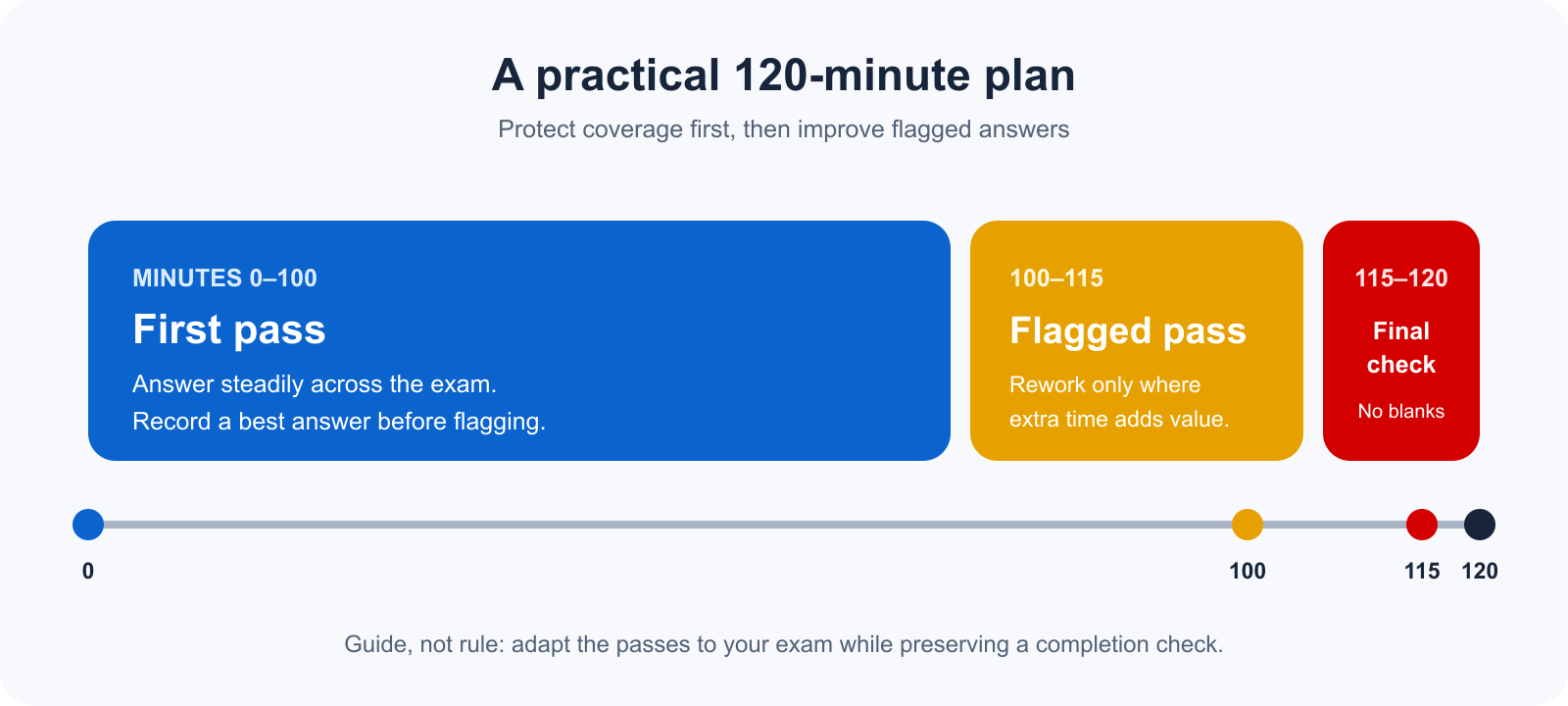
Figure 1: A practical three-pass plan. Adapt it to your exam and working style, but protect the final review.
A reliable approach is:
- First pass: work steadily through the exam, answering questions you can solve with reasonable confidence. If a question is blocking progress, make the best reasoned selection you can, flag it and continue.
- Flagged pass: return to questions where additional thought or calculation may genuinely improve the answer. Do not revisit every answer merely because time remains.
- Completion check: use the navigator or progress screen to find anything incomplete, confirm multiple-response selections and check number-entry formats before submitting.
Do not interpret “flag and move on” as “leave blank and hope”. Record your best answer first. A flag is a reminder to reconsider, not a substitute for an answer.
Know what each question type demands
Multiple choice
One response is required. For a numerical question, calculate before reading the options where possible. Incorrect options are often based on a recognisable mistake: using an annual amount as a monthly amount, forgetting a relevant cost, reversing a debit and credit, or stopping one step before the final answer.
Multiple response and matching
Read how many responses are required. Treat every statement separately and decide whether it is correct before considering the set as a whole. In a matching question, make sure every row or item has a response.
Number entry
Enter the answer in the units and format requested. Check whether the requirement asks for dollars, thousands of dollars, units, days, a percentage or a decimal. Use the requested rounding. Do not add a currency sign, percentage sign or commas unless the interface asks for them.
MTQ-only formats
MTQs may also use gap fills, drop-down lists, hotspots or other interactive responses. The total marks for an MTQ are divided across its tasks, so an individual blank or selection may be worth less than two marks. Read the whole scenario once for context, then answer each task on its own terms.
Use the same four-step method every time
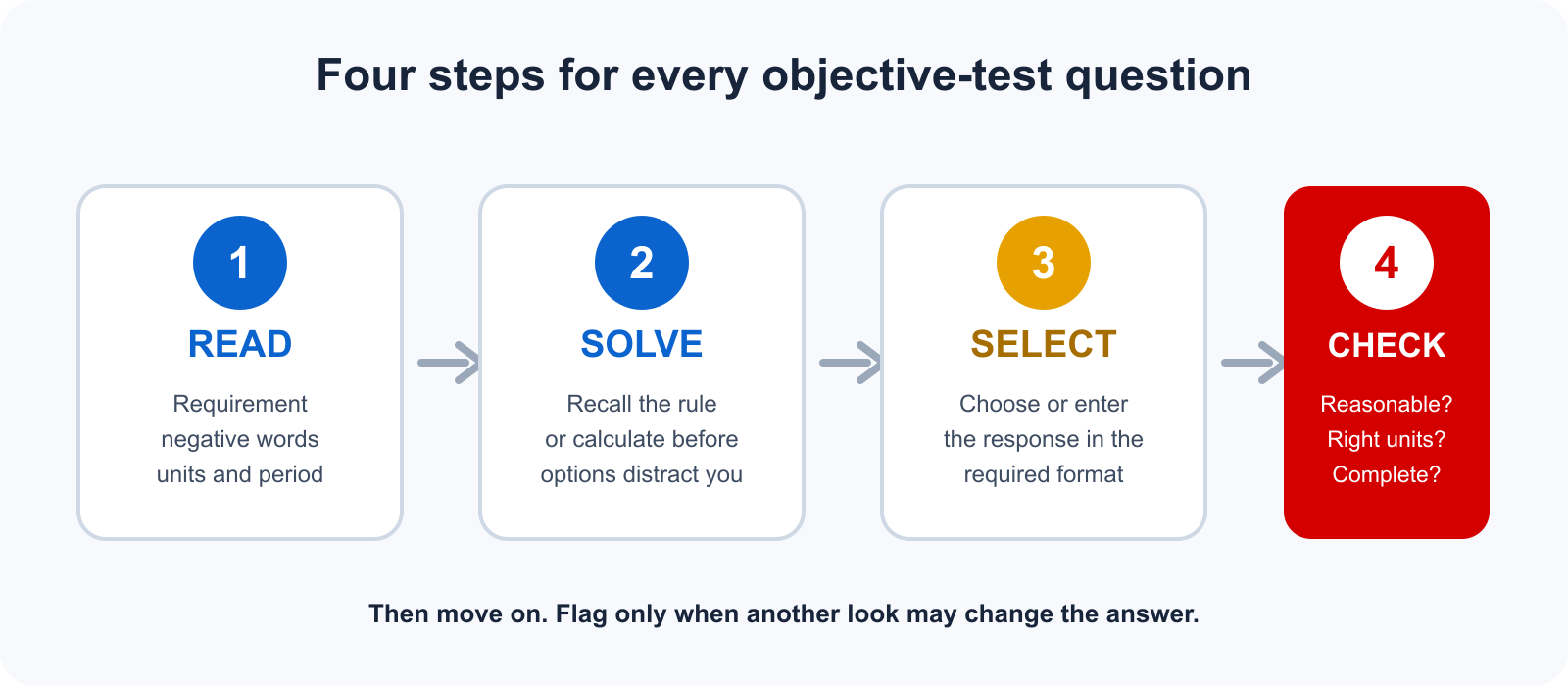
Figure 2: Read, solve, select and check—before moving on.
- Read: identify the topic, the precise requirement and any words that reverse or limit it, such as not, except, maximum, minimum, most likely or least likely.
- Solve: recall the rule, perform the calculation or evaluate the statements without being led by the options.
- Select or enter: respond to the requirement in the format shown.
- Check: ask whether the answer is reasonable, whether the units are correct and whether the required number of options has been selected.
Technique for numerical questions
- Translate the data before calculating. Mark the relevant dates, periods, units and assumptions. A monthly figure and an annual figure cannot be combined without conversion.
- Picture the route. Before pressing calculator keys, decide the steps from the information given to the answer required.
- Keep short, legible workings. Although on-demand workings are not marked, they make it easier to check and repair an answer without starting again.
- Estimate first. A rough expectation helps expose impossible results, such as an inventory holding period of millions of days or a negative answer where only a positive quantity is meaningful.
- Do not chase an exact option. If your answer is close but not identical to an option, check rounding, units and whether the option represents an intermediate figure.
- Know when to stop. After a sensible attempt and one quick check, flag the question and protect the rest of the exam.
Technique for narrative questions
Narrative questions are not automatically quick. Two statements may differ by one technically important word, so read them fully.
- Answer from the syllabus rule, not from what happens in one employer or one country unless the scenario makes that relevant.
- For “which statements are correct?” questions, evaluate each statement as true or false before looking at the combinations.
- If uncertain, eliminate clearly incorrect answers. Then choose between the remaining responses using the exact wording of the requirement.
- Do not invent a trick. If one answer is clearly supported by the rule and the others are not, select it and continue.
- In LW, distinguish a general legal principle from an exception and pay attention to the applicable English or Global syllabus.
How to handle Section B multi-task questions
An MTQ tests whether you can use knowledge in context. Do not assume that every task depends on the answer before it. Read the scenario for the facts relevant to the current task, then deal with that task directly.
- Note the total marks and set a time limit: about 5 minutes for a four-mark BT MTQ, 7 minutes for a six-mark LW MTQ, 12 minutes for a ten-mark MA MTQ and 18 minutes for a 15-mark FA MTQ.
- Read the task before searching the scenario. This gives the facts a purpose.
- Complete the easier tasks first if one calculation is blocking you.
- Check every drop-down, gap, row and hotspot before leaving the MTQ.
- Use the navigator later if one task remains genuinely uncertain.
Prepare for the way the exam tests you
1. Cover the whole syllabus
Use the current syllabus and study guide as a checklist. Work through the OpenTuition notes and lectures in sequence, then answer questions immediately after each topic. Watching a lecture creates familiarity; answering a question proves whether you can retrieve and apply the knowledge.
2. Build question volume gradually
Begin with short topic sets, then mix topics. Later practice must reproduce the exam’s rapid movement from one syllabus area to another. Use a current revision kit from an ACCA Approved Content Provider as well as ACCA’s specimen and practice resources.
3. Keep an error log
Classify each mistake:
- Knowledge: the rule or method was not known.
- Interpretation: the requirement, date, unit or scenario fact was misread.
- Process: the method was known but applied in the wrong order.
- Accuracy: arithmetic, sign, rounding or data-entry error.
- Time: the question was allowed to consume too long.
The remedy should match the error. More rereading will not cure rushing; more questions without reviewing the rule will not cure a knowledge gap.
4. Practise the current interface
Complete the official specimen exam before the real attempt. Practise moving through questions, flagging, using the calculator where provided, completing every input and reviewing the navigator. Interface familiarity releases attention for technical thinking.
A strong final seven days
- Complete at least one full timed exam or realistic mock early enough to repair weaknesses.
- Review every wrong answer and every correct answer that was guessed.
- Revise from the error log and syllabus checklist, not by restarting the entire textbook.
- Repeat short mixed sets under time pressure.
- Confirm identification, booking, location or remote arrangements, equipment requirements and start time.
- Protect sleep. A tired candidate misreads words and units they know perfectly well.
Exam-day checklist
- Arrive or log in early and complete the required checks.
- Read the on-screen instructions; do not assume the specimen and live screen are identical.
- Start steadily. Do not turn the first difficult question into a judgement about the whole exam.
- Keep the clock visible and compare progress with marks completed.
- Record a response before flagging a question.
- Leave enough time for a completion check and submit only when you have reviewed the navigator.
Common mistakes that cost avoidable marks
| Mistake | Better habit |
|---|---|
| Studying favourite topics in depth and neglecting the rest | Use the syllabus checklist and mixed question sets |
| Looking at numerical options before calculating | Work independently, then match the answer |
| Spending ten minutes rescuing two marks | Make a reasoned attempt, flag and move |
| Missing “not”, “except” or the number of selections | Pause on the stem before solving |
| Entering the right number in the wrong units | Read the unit twice and perform a reasonableness check |
| Leaving questions incomplete | Use the navigator and record a best answer |
Frequently asked questions
Must I start with Section A?
No. Many students do, but the correct order is the one you have practised and can control. Starting with Section B can work, provided you still protect time for every Section A question.
Should I answer every question?
Yes. All questions are compulsory. If you cannot solve one confidently, eliminate what you can, enter your best answer, flag it and move on.
Can I use old practice questions?
Use them only after checking that the syllabus and exam format remain current. Recent specimen material and a current revision kit are safer, especially for law or any area affected by rule changes.
How do I know I am ready?
You can complete mixed questions across the syllabus, finish a timed mock, use the interface without hesitation and explain why wrong answers were wrong. Confidence without timed evidence is not a readiness test.
Official sources and next steps
- ACCA: how to prepare for on-demand CBEs
- ACCA exam support resources, syllabuses and specimen exams
- ACCA exam availability and booking
- OpenTuition free ACCA notes, lectures, tests and tutor forums
This guide was reviewed on 15 July 2026. Always confirm the current syllabus, specimen exam and booking arrangements with ACCA before acting.