Relevant cash flows for DCF Working capital (examples 2 and 3) - ACCA Financial Management (FM)
YouTube video
28 Comments
G
Gowri·
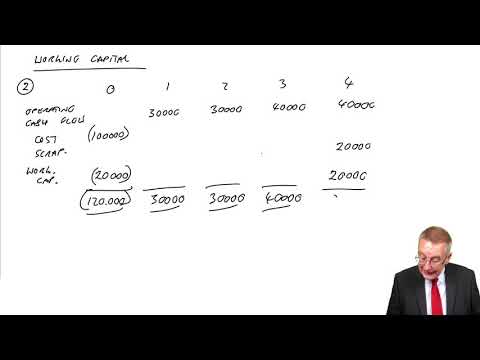
T0 - (500)
T1 - (600)
T2 - 300
T3 - (100)
T4 - 900
Why is T2 positive sir. I can't understand that part. Why negatives and positives ?
J
John MoffatTutor·
Positive means that there is a net inflow (receipt) of cash. Negative means that there is a net outflow (payment) of cash.
G
Gowri·
Thank you sir.
B
Benny·
Hi Sir John,
I have a question related to Chapter 8 example 3 Working capital.
The cash for the cost of capital was as follows:
(500) for year 0
(600) for year 1
300 for year 2
(100) for year 3
And when it come to year 4, shouldn’t it be (900) instead of a 900?
J
John MoffatTutor·
No. At the end of the project we get back all the working capital, and so there is an inflow of 900.
B
Benny·
Noted Sir John, I will remember that. Thank you.
K
Kudakwashe Faith Museka·
Why did we not add back depreciation to the operating costs since its a non-cash item? Aren't operating costs inclusive of depreciation?
K
Kudakwashe Faith Museka·
ignore, i got it.
J
John MoffatTutor·
Great :-)
M
MohamedSupporter·
Thank you Sir
M
moscom·
I'm really enjoying this lecture series.. Thank you very much Prof.....
J
John MoffatTutor·
Thank you for your comment :-)
F
faith20ul19·
Thanks for this lecture. The 10% WC requirement for each year was a bit tricky but am okay with it now after revisiting the video lecture again.
J
John MoffatTutor·
yiannia194415: Yes. Time 0 is the start of the first year. Time 1 is the end of the first year/start of the second year. Time 2 is the end of the second year/start of the third year, and so on :-)
Y
Yiannis·
That is great. Thank you very much for the prompt reply!
Y
Yiannis·
I wanted to ask, in the case that Working Capital was required at the end of each year, would we start recording W.C. from Year 1 onwards?
J
Jagmeet·
Hi sir, l wanted to ask that could it mean that if we get back the working capital we are selling our receivable and inventory
J
John MoffatTutor·
Not really. It is inventory that is the most important factor and that what will happen in the final year is that they will use up all the inventory and therefore buy less materials than are needed in the final year.
A
Ali·
Hey sir!
Sorry to bother with many questions but I can't seem to understand the logic behind the getting back of working capital?
I understand your point that at the end of the project the working capital will be back as an inflow as it is no longer needed. However I fail to understand how would we get back the amount of working capital which we have already spent in buying inventory and day to day activities of the business. How is it practically possible to get back a amount which we have already spent?
Thanks :)
J
John MoffatTutor·
Inventory is the best example. You buy inventory at the start - so a cash outflow for working capital. You keep inventory for so long as the project continues. However in the final year, you no longer need to end up with inventory at the end, so in the final year you use up the inventory and make fewer purchases than you otherwise would.
So it is not really getting cash back - it is the amount by which you make fewer purchases in the final year.
A
Ali·
Why do we have to show the net amount of sales and operating costs in the 3rd example?
Can't we just show them separately as cash inflow ( sales) and outflow ( operating cost)
Would finding the net amount garner extra marks?
Thank you!
J
John MoffatTutor·
As long as you end up with a net cash flow at the end (because that is what the question asks for) then it doesn't matter how you set it out.
K
kkipouros·
Hello Mr Moffat.My question is about the end of your lecture and the possibility of the project carrying on so we are not getting back the working capital.Now if that is the case I understand the first example where we simply don't add the initial standard amount of 20.000 back because are operations continue..
In the second example though, a working capital is needed each year as a percentage of next year's revenue. So if the project continues shouldn't we add an amount of working capital required in the 4th year? And if yes, shouldn't the examiner give as the next year's revenue to calculate this working capital?
Many thanks!
J
John MoffatTutor·
You have a good point, but I am afraid that you have to make do with whatever information the exam question gives you (and he does not usually give the revenue for the following year).
K
kkipouros·
Thank you very much
A
Aditya·
what is the logic behind getting back the working capital at the end of the project ?
if we have put in an amount which is utilized where do we get it back from?
is it that the entire working capital is not used at once and there might be some amount remaining which was left unused at the end of the project ?
J
John MoffatTutor·
As I state in the lecture, the working capital is needed for such things as buying inventory. They will buy inventory at the start of the project and carry inventory throughout the life of the project. At the end of the life they no longer need the inventory and so will purchase less goods in the final year - effectively they will be getting back the value of the inventory.
A
Aditya·
oh right it makes sense I missed out on that part in the lecture. Thank you so much for your reply Mr.Moffat and thank you for your efforts in open tuition, i really appreciate it.


T1 - (600)
T2 - 300
T3 - (100)
T4 - 900
Why is T2 positive sir. I can't understand that part. Why negatives and positives ?
I have a question related to Chapter 8 example 3 Working capital.
The cash for the cost of capital was as follows:
(500) for year 0
(600) for year 1
300 for year 2
(100) for year 3
And when it come to year 4, shouldn’t it be (900) instead of a 900?
Sorry to bother with many questions but I can't seem to understand the logic behind the getting back of working capital?
I understand your point that at the end of the project the working capital will be back as an inflow as it is no longer needed. However I fail to understand how would we get back the amount of working capital which we have already spent in buying inventory and day to day activities of the business. How is it practically possible to get back a amount which we have already spent?
Thanks :)
So it is not really getting cash back - it is the amount by which you make fewer purchases in the final year.
Can't we just show them separately as cash inflow ( sales) and outflow ( operating cost)
Would finding the net amount garner extra marks?
Thank you!
In the second example though, a working capital is needed each year as a percentage of next year's revenue. So if the project continues shouldn't we add an amount of working capital required in the 4th year? And if yes, shouldn't the examiner give as the next year's revenue to calculate this working capital?
Many thanks!
if we have put in an amount which is utilized where do we get it back from?
is it that the entire working capital is not used at once and there might be some amount remaining which was left unused at the end of the project ?