In which lecture do you discuss “transfer of excess depreciation on revaluation between revaluation surplus and retained earnings” ?
I”m stuck on this question in exam kit?
Thank you
J
John MoffatTutor·
In the lectures on limited companies.
R
rim·
love your lectures!
in example 5, i paused the lecture to do it on my own and i did this,
3600000 - (1080,000+3600) = 2484000
so revaluation surplus = 3072000 - 2484000 = 588000
sorry, T accounts confuse me a lot at times, do you think it would be asked for me to present this in T account form only in the exam or is it better for me to understand it the way i did above?
A
ashif94·
Hello John, I'm little bit confused about this video. Could you please give me the double entries?
J
John MoffatTutor·
You can see all of the double entries in the printed answer in the free lecture notes :-)
T
Thenuka·
Dear John,
I’m not sure if I missed it, But I haven’t noticed you mentioning the Useful Economic Life for the Building either in your lecture or In the notes/question.
I was only able to find it in your Answer on Pg 134.
I also found it difficult to calculate the depreciation charge for the 2nd half of the year (1 JUL – 31 DEC) since you didn’t mention this in your lecture.
However,
Could you please be kind enough to explain how you arrived at “$44,522” as the Depreciation charge, The Value of “$72,000” & why we divided “1,116,000 ÷ by 72,000”.
Thank You!
J
John MoffatTutor·
Before the revaluation, the depreciation charge was 2% x 3,600,000 = 72,000 per year, and the expected useful life for 2% a year was 50 years.
The accumulated depreciation was 1,080,000 and so they must have owned it for 1,080,000/72,000 = 15 years,
It was revalued 6 months later, by which time they had owned it 15.5 years, and so the remaining life is then 50 - 15.5 = 34.5 years.
T
Thenuka·
Dear John,
I'm not sure if I missed it, But I haven't noticed you mentioning the Useful Economic Life for the Building either in your lecture or In the notes/question.
I was only able to find it in your Answer on Pg 134.
I also found it difficult to calculate the depreciation charge for the 2nd half of the year (1 JUL - 31 DEC) since you didn't mention this in your lecture.
However,
Could you please be kind enough to explain how you arrived at "$44,522" as the Depreciation charge, The Value of "$72,000" & why we divided "1,116,000 ÷ by 72,000".
Thank You!
P
PRAVEEN·
I have seen accountants expensing/reducing upward revaluation reserves in future years.Is this correct?
Upon asking reply received is its not the actual profit so can't show in books?
For ex: Say £500K upward revaluation being expensed as 50K for next 10 yrs.
Thanks.
J
John MoffatTutor·
As explained in the lectures. depreciation is charged on the revalued amount, and the excess over the 'new' depreciation and the 'original' depreciation may be transferred each year from the revaluation reserve to retained earnings (which is the same effect as what you have written).
P
PRAVEEN·
Thank you John.
Could you please help me to refer any videos or notes to go through charity accounting/Not for profit as its slightly different from pvt and public limited org. Moreover its not covered anywhere in ACCA , CIMA or anywhere.
Any guidance will be highly appreciated.
Thanks.
M
Moin·
what lecture would that be? as Depreciation on evaluation was not covered in this one.
J
John MoffatTutor·
As I do state in the lecture, it is covered in the lectures on Accounting for Limited Companies, because it is only applicable to limited companies.
A
Aasif·
Greetings John,
First and foremost thank you and OpenTuition team for providing a great learning platform for ACCA aspirants.
May I request you to please provide further explanation on your above comment that depreciation is charged on the revalued amount, and the excess over the ‘new’ depreciation and the ‘original’ depreciation may be transferred each year from the revaluation reserve to retained earnings
Does it mean that post revaluation, each subsequent year we have to keep calculating difference in depreciation charge as per original cost and depreciation charge on revalued cost and then transfer the difference to revaluation reserve till it becomes zero.
Appreciate your kind inputs
J
John MoffatTutor·
Yes, that is what it means :-)
P
Pedro·
Hi, what about the part of looking at the new depreciation, and moving the excess from the revaluation surplus to the retained earnings?
J
John MoffatTutor·
That is explained in the lectures.
P
Pedro·
The transfer of the change in depreciation from the rev. reserve to the retained earnings, is this for the 1st year only? or would you have to do this for every year after too?
J
John MoffatTutor·
Every year.
N
Nicholas·
For the example question, when it would come to writing the SOFP, is the depreciation expense the 6 months to the end of the year?
Would this not have an effect on the profit after revaluation as the question asks till the end of the year?
S
shazia786·
Hi Jon,
The 3.072 revaluation figure, is this a random number you just picked as the reval number to use?
and when you said to divide 3,600 by 3.072 equalling 52,800. Did you not mean subtract instead of divide?
Thanks
J
John MoffatTutor·
It is certainly not a random number. The question (on page 31 of our free lecture notes) says that it is to be revalued to $3,072,000 - that is what the company has had it valued at.
M
Morgan·
Hello Prof,
Is this to say that the quickest way to deal with a question of this nature is to use T - accounts?
J
John MoffatTutor·
That depends on the question (and why it is so important to practice all the questions in your Revision Kit). For most questions I do not use t-accounts, but you can still be tested that you understand t-accounts even thought you cannot be required to prepare them.
S
Sabyasachi·
Hello sir. After Revaluation, we remove the accumulated depreciation completely and the cost of the asset is replaced with the revalued amount. But between year start and date of revaluation there was a gap of 6 months so for that year we charged 6 months depreciation before revaluing. Now that six months depreciation expense was in the SOPL right? After Revaluation, the depreciation expense of 6 months still remains in the SOPL or not?
J
John MoffatTutor·
No. At the date of the revaluation, the accumulated depreciation is reset to zero and from then on depreciation is calculated on the revalued amount.
S
Sabyasachi·
Thank you sir. Also, I had another question. Due to covid 19 we are giving remote exams at our own house. Will we be allowed to use pen and paper for doing the calculations and making the t accounts? Or are we supposed to do it mentally?
J
John MoffatTutor·
In future please ask this sort of question in the Ask the Tutor Forum and not as a comment on a lecture. You are not allowed to use pen and paper but there is a scratch pad on the computer and you can do rough workings on that.
W
Whitney·
Good morning sir,
If you buy a piece of land or build instead how we goin to treat with it (is the same where we treat with revaluation)?
J
John MoffatTutor·
We debit the asset account and credit cash or payables as we always do when we buy a non-current asset.
If we later revalue then the entries are the same as for any revaluation.
S
shakir7385·
What if revaluation of assets turned out to be loss. would it appear as a negative balance under equity
J
John MoffatTutor·
No. It is depreciation!
M
Megha·
Hello Sir,
while going through Kaplan text the double entry given for this is Dr. Non current Asset Dr Accumulated dep and Cr. Revaluation Surplus
and applying the same on this sum i am getting Dr. NCA 528000 Dr Acc dep 1116000 Cr RS 588000, which actually doesnt make sense as the debit and credit entry is not equal.
Can you please explain the same, would really appreciate.
J
John MoffatTutor·
I do explain in the lecture!!
The cost needs changing to the revalued amount. If the new value is more than the original cost then we debit the asset account, but if the new value is less than the original cost then we credit the asset account.
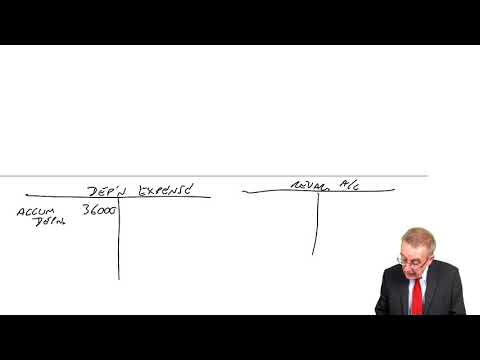
Therefore the entry is: Cr NCA 528,000 Dr accumulated depreciation 1116000 Cr revaluation reserve 588,000
Do look again at the lecture (or check with the printed answer in the lecture notes).
M
Megha·
Thanks a lot !! :)
J
John MoffatTutor·
You are welcome :-)
M
Mathias Etornam·
Where else could one get these wonderful lectures and wouldn't pay a penny? Thank you so much John. I dearly appreciate your patience especially in answering our 'silly' questions.? Most importantly I really admire your temperateness!
N
noureeen·
am
Sir,I have a doubt. I dont know if its silly but its just for confirming..
Here the original cost was 3.6m whereas revalued amount was 3.072 which was lesser than original cost thus it was credited to reduce the amount..
So if incase the revalued amount was higher than the original cost like suppose original cost is 3.6m whereas revalued amount is 3.8.. so what will be the effect? Wont the opposite happen? The differrnce amount will be debited as revaluation reserve below the balance of 3.6m to increase to thr revalued amount right?
Please do help me confirm,im not really sure if I understood this well. Thankyou sir.
N
noureeen·
And im also confused while revaluing if we are concerned with the carrying value.. and if we are comparing the revalued amount with carrying value then the revalued amount is an increase in value.. then why is it that we are comparing it with original cost and reducing the amount of original cost ?
I know I must be sounding pretty silly,but i just confused myself completely!
J
John MoffatTutor·
If there was no revaluation then the asset would appear on the sOGP at the original cost less the accumulated deprecation.
If we revalue, we replace the cost with the revalued amount and we remove the accumulated depreciation (and in future we depreciate on the revalued amount).
The surplus on revaluation is always the difference between the revalued amount and the carrying amount that previously existed.
Check the entries slowly again and you will see how this has been achieved. Before the revaluation we had the SOFP showing the cost less the accumulated depreciation. After the revaluation the cost account is showing the revalues amount and the accumulated depreciation has zero balance, so the new carrying amount on the SOFP is the revalued amount.
K
Khaula Basheer·
Hi John,thanks for the lecture.But there is no working shown in the notes for chapter 13 and even the answer key asks us to refer th lectures.It would be really helpful if you can explain how depreciation is calculated on the revalued amount.
J
John MoffatTutor·
If you refer back to the chapter on depreciation, then example 5 is the same example but I say in the lectures for depreciation that I will work through it in the lectures on limited companies (because it is only limited companies who will revalue assets). The answer is in the notes in the answers to the examples in the depreciation chapter.
K
Khaula Basheer·
Thank you so much for your prompt reply!
It instantly cleared a major doubt.
M
Muhammad Haroon Rasheed·
Can a company issue bonus shares from the revaluation account?
J
John MoffatTutor·
Yes they can (unless the laws of the specific country prohibit it, but that is outside the scope of Paper FA).
They can use any reserve, but will prefer to use capital reserves (for the reason explained in the lectures).
For Paper FA it will always be from the share premium account.
M
Mary·
Hello Sir
I didn't understand why you did not subtract the accumulated dep of 1080000 from the cost while you were calculating the dep for the 6 months
M
mehrankhan105·
I have been following open tuition from last couple of weeks and had understood every single lecture that I had to listen to. But I have got to admit that I really struggled with this lecture. I couldn't understand a word and it seems like I have gone back to zero.
I feel really bad about myself.
L
lakshmi123·
Sir I couldn't understand the logic of revaluation resvers
J
John MoffatTutor·
If an asset is actually worth more than the net book value (the carrying value) on the SOFP, then the company can (if it wants to) increase the value.
That means there is a profit and this means more is owed to shareholders. However because the profit is only on paper - they have not actually received any cash - the profit cannot be paid to shareholders are dividend which is why it is shown separately as a revaluation reserve.
F
fariuafrah99·
Hello Sir,
I saw the following lines from the open-tuition course notes. Can you please explain what it means?
"The depreciation charge will be higher than it was before the revaluation, and the excess of the
new charge over the old charge should be transferred from the revaluation reserve to retained
earnings."
J
John MoffatTutor·
The new depreciation is calculated on the revalued amount, whereas before it would have been calculated on the original cost (and would therefore have been lower).
The company will charge the new depreciation (which reduces the profit and therefore reduced retained earnings). However they can then transfer the difference between the new depreciation and the old depreciation from the revaluation reserve to the retained earnings.
N
noureeen·
Sir,I have a doubt. I dont know if its silly but its just for confirming..
Here the original cost was 3.6m whereas revalued amount was 3.072 which was lesser than original cost thus it was credited to reduce the amount..
So if incase the revalued amount was higher than the original cost like suppose original cost is 3.6m whereas revalued amount is 3.8.. so what will be the effect? Wont the opposite happen? The differrnce amount will be debited as revaluation reserve below the balance of 3.6m to increase to thr revalued amount right?
Please do help me confirm,im not really sure if I understood this well. Thankyou sir.
A
Abiriyi·
Good day Sir and thank you for the lectures.
From the example we are using a straight line depreciation method and upon revaluation the cost is 3,072,000 which is less than 3.6m so how can the new depreciation charge be higher given that the future depreciation charge would be based on the revalued amount?
J
John MoffatTutor·
The original useful life was 50 years. (100%/2%)
At the date of the revaluation the remaining useful life was only 34.5 years, as explained in the lecture.
A
Abiriyi·
Thank you for your reply Sir.
Given that the remaining useful life is 34.5 years and in other to fully charge of cost over the useful life of 34.5 years it means would be charging a higher percentage of about 2.8985 % right?
And how do we move the excess of the new depreciation charge over the old depreciation charge from the revaluation reserve to retain earnings, what is the accounting entries?
J
John MoffatTutor·
It will effectively mean a higher percentage, but you certainly do not need to calculate the % - just divide by the remaining years as I do in my lecture working through this example.
The entry for the excess depreciation is to debit the revaluation reserve and credit retained earnings (as, again, I do explain in the lecture).
Y
Yedidia·
Sir, I quote from the lecture notes "The depreciation charge will be higher than it was before the revaluation, and the excess of
the new charge over the old charge should be transferred from the revaluation reserve to
retained earnings". What would the double entry be? I understand we would DR the revaluation reserve to reduce it, but where would it go to? Would we DR retained earnings to reduce that as well?
J
John MoffatTutor·
Debiting two accounts would not be double entry :-)
We DR revaluation reserve, and CR retained earnings. As a result, the total reserves will not change, but the distributable reserve (retained earnings) is higher and the non-distributable reserve (revaluation reserve) is lower.
Y
Yedidia·
But surely if the depreciation charge is higher, would that not reduce distributable reserves as well? Does it not reduce the value of the asset and therefore what shareholders are entitled to (retained earnings)? Why does it not reduce retained earnings? Therefore total reserves should be reduced
J
John MoffatTutor·
Retained earnings and revaluation reserve are both reserves. so reducing revaluation reserve and increasing revenue reserve does not change the total owing to shareholders - it simply makes more or the reserves available for distribution as dividend.
It is the total reserves plus the share capital that represent the amount owing to shareholders.
Y
Yedidia·
Sir, why is it necessary to remove the depreciation and then credit the cost a/c in order to re-evaluate, would it not just be simpler to re-evaluate upwards on top of the accumulated depreciation?
J
John MoffatTutor·
Because in the asset account we are required to show either the original cost or, if revalued, the revalued amount. Doing what you suggest would end up showing neither in the asset account :-)
L
landyyo·
Hello Sir,
I noticed that the depreciation expense and accumulated depreciation just kinda stopped after the 30 June 2003 mark. However, there is still another 6 months from 30 June 2003 to 31 Dec 2003, so shouldn't the depreciation expense and accumulated depreciation be accounted again?
In this case, the depreciation expense is $30,720 while the accumulated depreciation is also $30,720.
J
John MoffatTutor·
If you check the answer printed in the free lecture notes, you will see that this has been done.
However the depreciation charge for the second half of the year is 44,522 (not 30,720) - the workings for this are in the notes.
K
Khaula Basheer·
Hi John,thanks for the lecture.But the notes do not have any working shown for chapter 13.The answer key asks us to refer the lectures.
J
John MoffatTutor·
See my reply to your other question about this (above).
M
Mohammed·
Also, how did u get 528000?
J
John MoffatTutor·
It is the difference between the original cost and the revalued amount, as I explain in the lecture.
M
Mohammed·
Sir, I thank you for your patience.
J
John MoffatTutor·
You are welcome :-)
M
Mohammed·
Hello Sir,
why did you credit 528000?
J
John MoffatTutor·
To reduce the original cost down to the revalued amount.


I”m stuck on this question in exam kit?
Thank you
in example 5, i paused the lecture to do it on my own and i did this,
3600000 - (1080,000+3600) = 2484000
so revaluation surplus = 3072000 - 2484000 = 588000
sorry, T accounts confuse me a lot at times, do you think it would be asked for me to present this in T account form only in the exam or is it better for me to understand it the way i did above?
I’m not sure if I missed it, But I haven’t noticed you mentioning the Useful Economic Life for the Building either in your lecture or In the notes/question.
I was only able to find it in your Answer on Pg 134.
I also found it difficult to calculate the depreciation charge for the 2nd half of the year (1 JUL – 31 DEC) since you didn’t mention this in your lecture.
However,
Could you please be kind enough to explain how you arrived at “$44,522” as the Depreciation charge, The Value of “$72,000” & why we divided “1,116,000 ÷ by 72,000”.
Thank You!
The accumulated depreciation was 1,080,000 and so they must have owned it for 1,080,000/72,000 = 15 years,
It was revalued 6 months later, by which time they had owned it 15.5 years, and so the remaining life is then 50 - 15.5 = 34.5 years.
I'm not sure if I missed it, But I haven't noticed you mentioning the Useful Economic Life for the Building either in your lecture or In the notes/question.
I was only able to find it in your Answer on Pg 134.
I also found it difficult to calculate the depreciation charge for the 2nd half of the year (1 JUL - 31 DEC) since you didn't mention this in your lecture.
However,
Could you please be kind enough to explain how you arrived at "$44,522" as the Depreciation charge, The Value of "$72,000" & why we divided "1,116,000 ÷ by 72,000".
Thank You!
Upon asking reply received is its not the actual profit so can't show in books?
For ex: Say £500K upward revaluation being expensed as 50K for next 10 yrs.
Thanks.
Could you please help me to refer any videos or notes to go through charity accounting/Not for profit as its slightly different from pvt and public limited org. Moreover its not covered anywhere in ACCA , CIMA or anywhere.
Any guidance will be highly appreciated.
Thanks.
First and foremost thank you and OpenTuition team for providing a great learning platform for ACCA aspirants.
May I request you to please provide further explanation on your above comment that depreciation is charged on the revalued amount, and the excess over the ‘new’ depreciation and the ‘original’ depreciation may be transferred each year from the revaluation reserve to retained earnings
Does it mean that post revaluation, each subsequent year we have to keep calculating difference in depreciation charge as per original cost and depreciation charge on revalued cost and then transfer the difference to revaluation reserve till it becomes zero.
Appreciate your kind inputs
Would this not have an effect on the profit after revaluation as the question asks till the end of the year?
The 3.072 revaluation figure, is this a random number you just picked as the reval number to use?
and when you said to divide 3,600 by 3.072 equalling 52,800. Did you not mean subtract instead of divide?
Thanks
Is this to say that the quickest way to deal with a question of this nature is to use T - accounts?
If you buy a piece of land or build instead how we goin to treat with it (is the same where we treat with revaluation)?
If we later revalue then the entries are the same as for any revaluation.
while going through Kaplan text the double entry given for this is Dr. Non current Asset Dr Accumulated dep and Cr. Revaluation Surplus
and applying the same on this sum i am getting Dr. NCA 528000 Dr Acc dep 1116000 Cr RS 588000, which actually doesnt make sense as the debit and credit entry is not equal.
Can you please explain the same, would really appreciate.
The cost needs changing to the revalued amount. If the new value is more than the original cost then we debit the asset account, but if the new value is less than the original cost then we credit the asset account.
Therefore the entry is: Cr NCA 528,000 Dr accumulated depreciation 1116000 Cr revaluation reserve 588,000
Do look again at the lecture (or check with the printed answer in the lecture notes).
Sir,I have a doubt. I dont know if its silly but its just for confirming..
Here the original cost was 3.6m whereas revalued amount was 3.072 which was lesser than original cost thus it was credited to reduce the amount..
So if incase the revalued amount was higher than the original cost like suppose original cost is 3.6m whereas revalued amount is 3.8.. so what will be the effect? Wont the opposite happen? The differrnce amount will be debited as revaluation reserve below the balance of 3.6m to increase to thr revalued amount right?
Please do help me confirm,im not really sure if I understood this well. Thankyou sir.
I know I must be sounding pretty silly,but i just confused myself completely!
If we revalue, we replace the cost with the revalued amount and we remove the accumulated depreciation (and in future we depreciate on the revalued amount).
The surplus on revaluation is always the difference between the revalued amount and the carrying amount that previously existed.
Check the entries slowly again and you will see how this has been achieved. Before the revaluation we had the SOFP showing the cost less the accumulated depreciation. After the revaluation the cost account is showing the revalues amount and the accumulated depreciation has zero balance, so the new carrying amount on the SOFP is the revalued amount.
It instantly cleared a major doubt.
They can use any reserve, but will prefer to use capital reserves (for the reason explained in the lectures).
For Paper FA it will always be from the share premium account.
I didn't understand why you did not subtract the accumulated dep of 1080000 from the cost while you were calculating the dep for the 6 months
I feel really bad about myself.
That means there is a profit and this means more is owed to shareholders. However because the profit is only on paper - they have not actually received any cash - the profit cannot be paid to shareholders are dividend which is why it is shown separately as a revaluation reserve.
I saw the following lines from the open-tuition course notes. Can you please explain what it means?
"The depreciation charge will be higher than it was before the revaluation, and the excess of the
new charge over the old charge should be transferred from the revaluation reserve to retained
earnings."
The company will charge the new depreciation (which reduces the profit and therefore reduced retained earnings). However they can then transfer the difference between the new depreciation and the old depreciation from the revaluation reserve to the retained earnings.
Here the original cost was 3.6m whereas revalued amount was 3.072 which was lesser than original cost thus it was credited to reduce the amount..
So if incase the revalued amount was higher than the original cost like suppose original cost is 3.6m whereas revalued amount is 3.8.. so what will be the effect? Wont the opposite happen? The differrnce amount will be debited as revaluation reserve below the balance of 3.6m to increase to thr revalued amount right?
Please do help me confirm,im not really sure if I understood this well. Thankyou sir.
From the example we are using a straight line depreciation method and upon revaluation the cost is 3,072,000 which is less than 3.6m so how can the new depreciation charge be higher given that the future depreciation charge would be based on the revalued amount?
At the date of the revaluation the remaining useful life was only 34.5 years, as explained in the lecture.
Given that the remaining useful life is 34.5 years and in other to fully charge of cost over the useful life of 34.5 years it means would be charging a higher percentage of about 2.8985 % right?
And how do we move the excess of the new depreciation charge over the old depreciation charge from the revaluation reserve to retain earnings, what is the accounting entries?
The entry for the excess depreciation is to debit the revaluation reserve and credit retained earnings (as, again, I do explain in the lecture).
the new charge over the old charge should be transferred from the revaluation reserve to
retained earnings". What would the double entry be? I understand we would DR the revaluation reserve to reduce it, but where would it go to? Would we DR retained earnings to reduce that as well?
We DR revaluation reserve, and CR retained earnings. As a result, the total reserves will not change, but the distributable reserve (retained earnings) is higher and the non-distributable reserve (revaluation reserve) is lower.
It is the total reserves plus the share capital that represent the amount owing to shareholders.
I noticed that the depreciation expense and accumulated depreciation just kinda stopped after the 30 June 2003 mark. However, there is still another 6 months from 30 June 2003 to 31 Dec 2003, so shouldn't the depreciation expense and accumulated depreciation be accounted again?
In this case, the depreciation expense is $30,720 while the accumulated depreciation is also $30,720.
However the depreciation charge for the second half of the year is 44,522 (not 30,720) - the workings for this are in the notes.
why did you credit 528000?